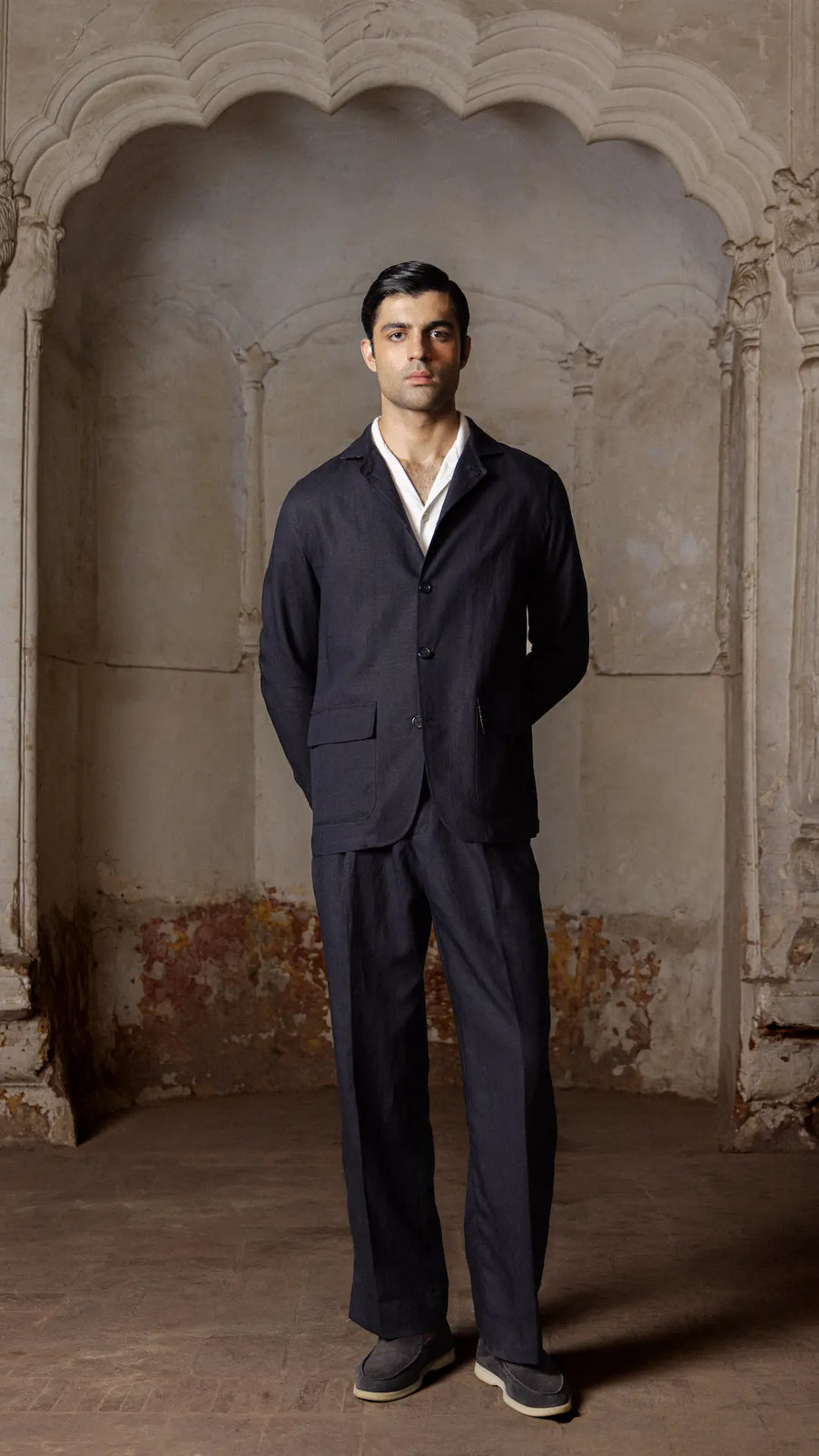
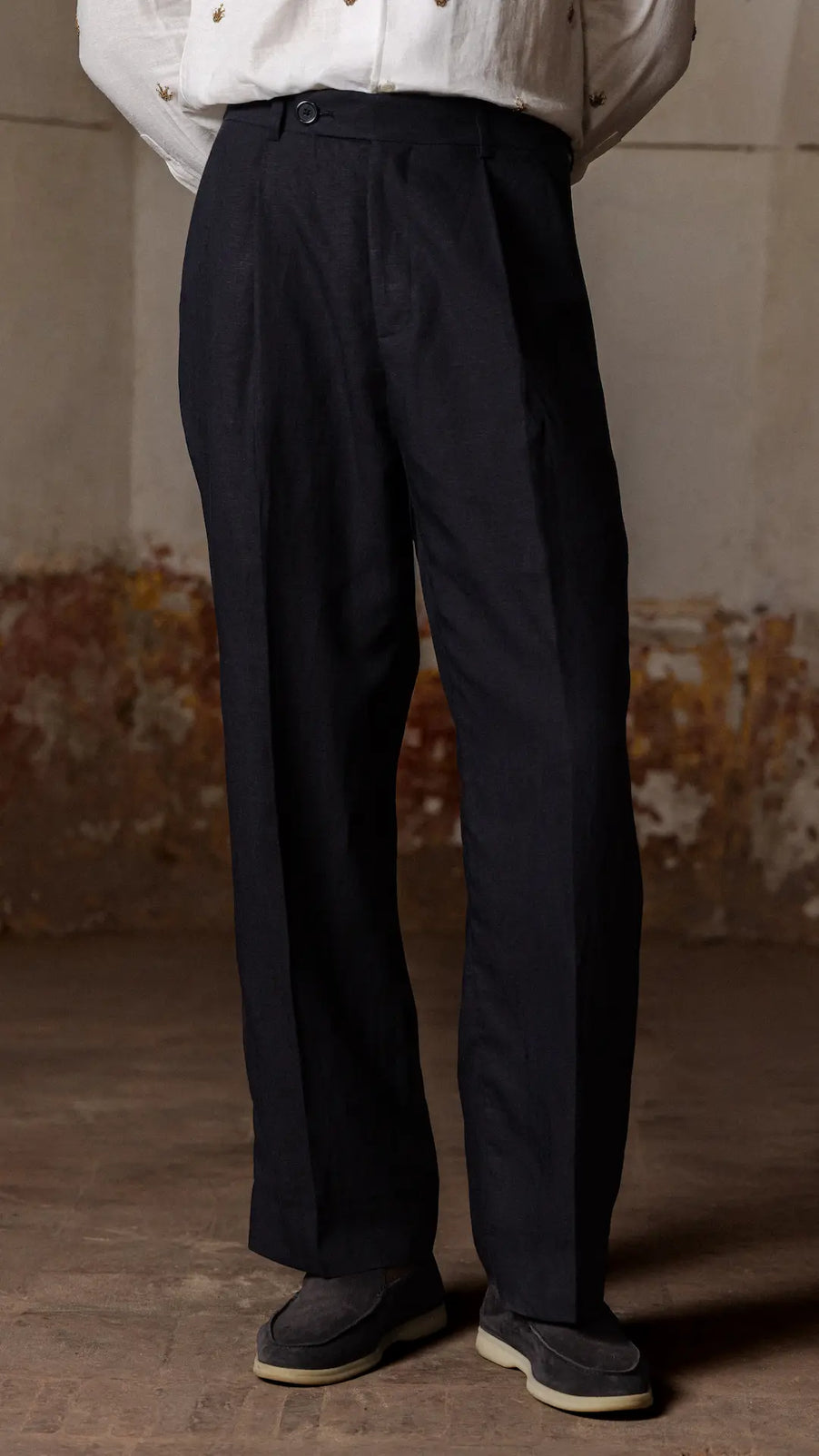
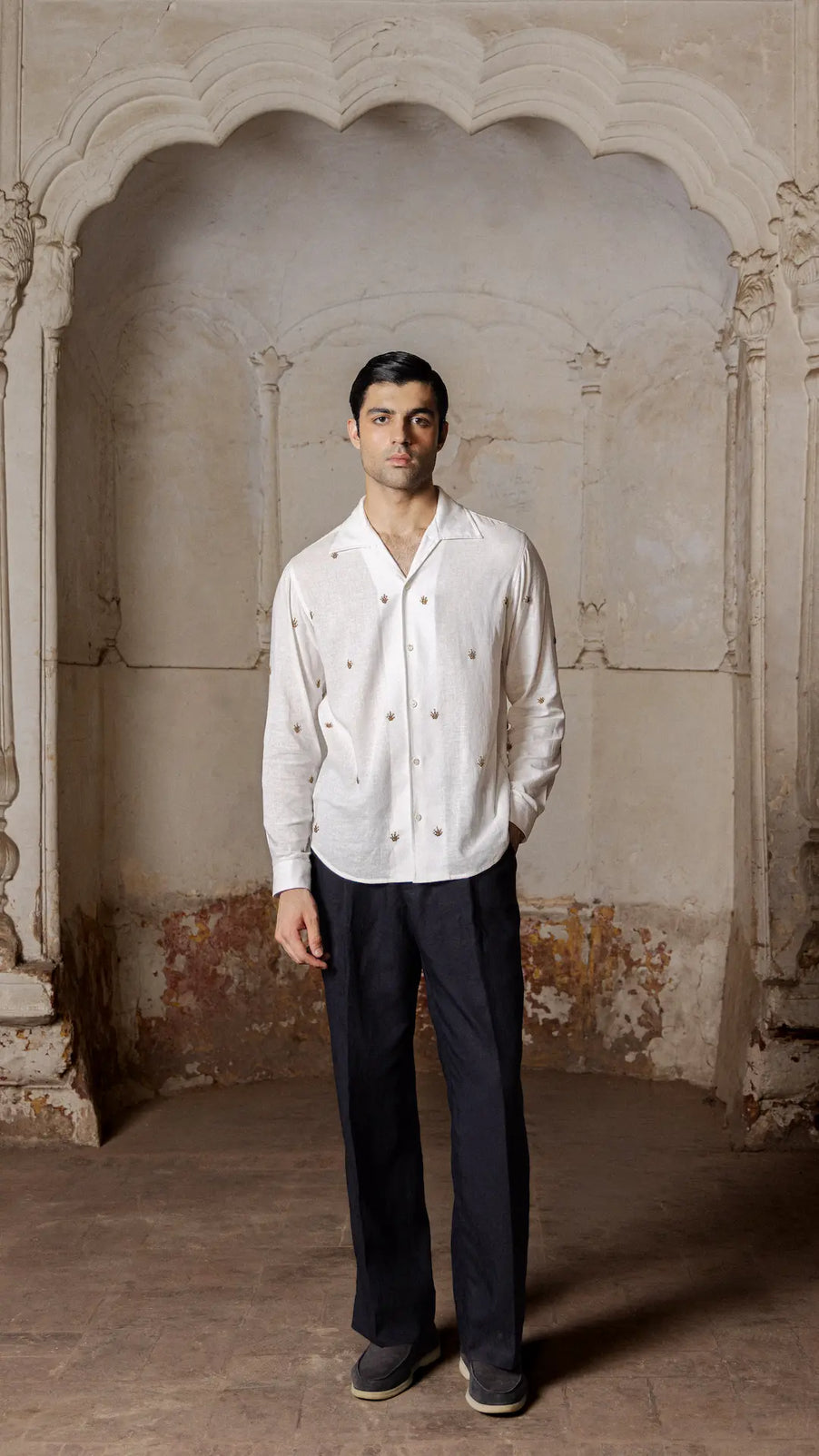
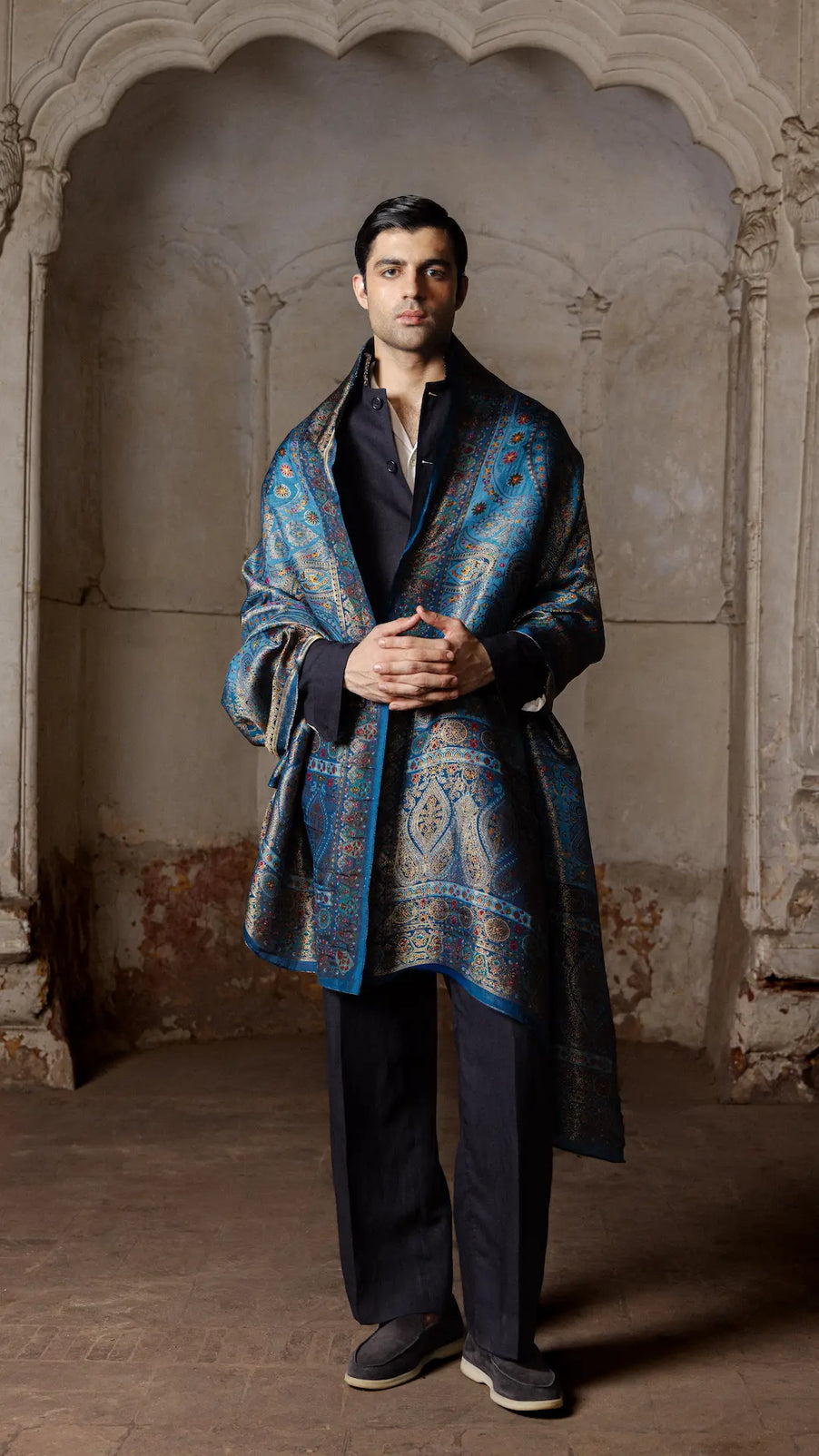
Resort 2026.
I had to sit with those two words for a while before I was willing to put them on anything.
Because resort isn’t a description. It’s a season — an invention of the fashion calendar, slotted between autumn and spring, created for a very specific customer with a very specific problem. She was going somewhere warm in January. She needed clothes for it. The industry built a whole commercial season around that trip and has been running it for a hundred years.
I’ve spent five letters explaining why that bothers me. So putting Resort 2026 on the first thing this house makes is either a contradiction or the entire point, and I’d like to tell you which.
The collection is called Lahori Riviera.
1. The season was never ours to be in
Here’s the thing about a resort season: it assumes you’re leaving.
Every garment in that tradition was designed for a person going toward heat and coming back out of it. That’s why it’s light in a temporary way. It’s holiday clothing — clothes for a version of yourself you’re renting for two weeks.
Now think about who’s been on the other end of that arrangement for the last century. The people already living in the heat. Growing the cotton, spinning it, weaving it, cutting it, sewing it, and — this is the part I keep coming back to — never once being photographed at rest in it.
We built the season. We were never in the season.
So Lahori Riviera isn’t a mashup and it isn’t irony. It’s a correction filed against a category. It says: the thing resort wear has been selling as an escape has been ordinary life here for centuries, done at a level of refinement the category never bothered to look at, and we’re going to make the clothes and take the pictures that should have existed the whole time.
Lahore has no coast. I know. I wrote a whole letter about it. Riviera was never really about water — it’s a posture. The permission to be at ease, dressed well, in heat, with nowhere urgent to be.
My grandmother had that posture in a courtyard with a ceiling fan and no air conditioning. Nobody ever called it leisure. That’s the correction.
2. So the clothes had to answer a real climate
Which turned into a design constraint, and a useful one.
If you’re making resort clothing for people who visit heat, you can get away with a lot. It only has to work for a week, in photographs, on holiday. If you’re making it for people who live in heat — and then get on a plane and live somewhere else too — it has to survive an ordinary Tuesday in two countries.
That’s the brief I actually worked to. Not what looks like vacation. What holds up in Lahore in June and still makes sense in Los Angeles in September.
It pushed everything toward the same set of answers, and they’re the answers that were already here: volume instead of tightness, so air moves rather than gets trapped. Weight chosen for how a fabric hangs in still air. Cuts that let you sit down in them for three hours. A low, warm palette that doesn’t fight sunlight.
None of that is a style decision I invented. It’s the logic of a place, applied honestly.
I said in the last letter that the first thing I made for this house is a trouser, and that it came from a cheap pair I couldn’t stop wearing. That’s true of more of this collection than I expected. Most of it started as something I wanted and couldn’t find at the quality I wanted it.
3. What it actually is
A small number of pieces. I’m not going to walk you through them here — you’ll see them on the 17th, photographed properly, and I’d rather they arrive as objects than as a list.
But here’s what’s true across all of them.
Every piece was made in Lahore by people we can name. Tailoring and pattern-making by Muhammad Amin, who everyone calls Faisal. Hand beadwork by Haider Abbas Bajwa. Block printing by hand, from carved wooden blocks, registered by eye. The pashmina is woven on handlooms by a small group of Kashmiri artisans in northern Pakistan, then hand-finished and inspected in Lahore by Faisal.
That paragraph is the whole difference between this and a brand that says artisanal. You can check it. That’s the standard.
The craft is placed where only the wearer finds it. Under a collar. Inside a cuff. Beneath a pocket flap. In a facing that shows when you turn a sleeve back. I explained the reasoning three letters ago and I’ll keep it short here: a detail nobody can see can’t be a costume, because a costume needs a viewer, and there isn’t one inside your own cuff.
Never more than 50 made. Some pieces are far fewer than that. Nothing gets restocked after it’s gone, in any size, ever.
4. Why so few
This is the part people push back on, so let me be direct about it.
Making fifty of something is commercially stupid in most of the ways that get measured. You lose every efficiency. Your cost per unit is worse. You leave money on the table when a piece sells out in a day, and you can’t do anything about it, because you decided in advance that you couldn’t.
I’ve thought about it a lot and I keep landing in the same place. The number isn’t a marketing device and it isn’t scarcity theatre. It’s the honest output of the way this is made. Fifty is roughly what a small number of named people can make properly, by hand, without the quality starting to slide — and the moment I raise it, I’m either lying about the process or asking those men to work in a way that makes their work worse.
There’s also a version of me that would have made three hundred and sold them faster. That version is the one from the first letter — the one taking direction from an engagement number. I’m not building for him anymore.
Never more than 50 made is not a disclaimer at the bottom of a product page. It’s the constraint the whole house is designed around, and everything good about these clothes is downstream of it.
There’s one more thing that follows from all of this — what a house owes the city that makes its clothes, and what we’ve decided to do about it. That’s its own letter and I’ll write it before the drop.
5. When
Thursday, September 17.
Osami & Friends get early access before anything opens publicly. If you’ve been reading these since October, or since the fruit market, that’s where you should be — it costs nothing and it’s the only way to be first.
I’m not going to spend the next two weeks selling at you. There’ll be one more letter before the 17th, and it’s about the part I just gestured at, not about product.
Five letters ago I told you I’d stopped announcing and started building. This is what that was for.
Shukriya for staying in the room while it was quiet.
Otherwise — go enjoy your chai. I’ll see you on the 17th.
— Osama