The Craft Is in the Details.
Craft is not added to a garment to make it feel special. It is part of how the garment is designed. Our approach brings contemporary fashion together with the techniques, patience and knowledge of Lahore's makers. The result is deliberately restrained — details placed with intention, usually where they are discovered rather than displayed.
Made to Be Discovered.
Craft does not need to cover a garment to give it character. We look for the quieter places where a detail can become part of the experience of wearing the piece — beneath the collar, under pocket flaps, inside cuffs, across the waistband, within pocket linings. These placements let traditional technique exist inside contemporary pieces without overwhelming the silhouette. The craft is there. It does not announce itself.
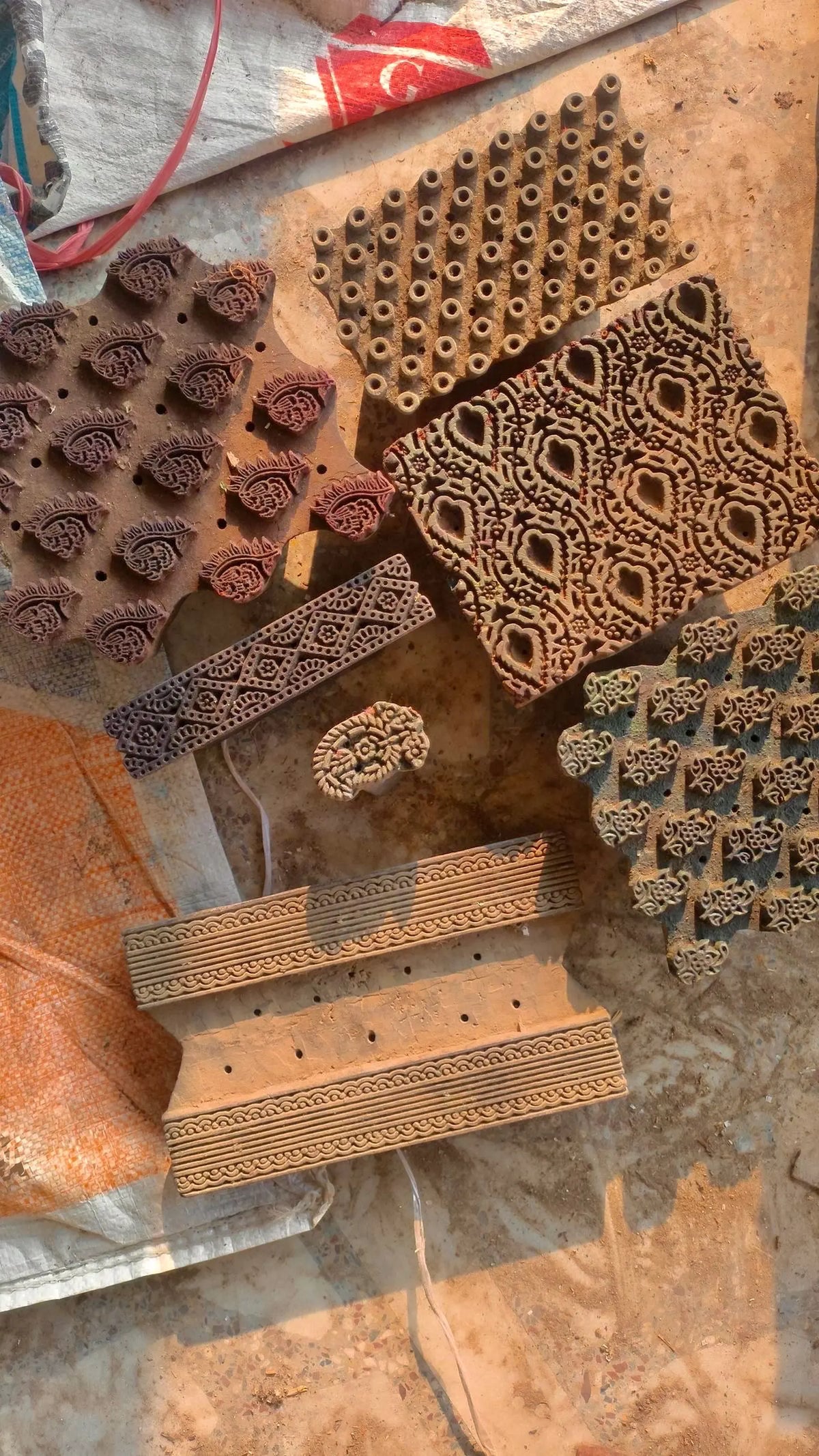
Block printing is one of the oldest textile techniques in the subcontinent, practised across South Asia for centuries. A craftsman carves a design in reverse into a wooden block — often a separate block for every colour in the pattern. The block is inked, pressed to the cloth, lifted, and moved along by eye. There is no machine registration and no guide. A millimetre of drift and the repeat is wrong for the length of the cloth.
What makes it difficult is what makes it worth doing. Every metre carries the hand of the person who printed it. On Osami pieces the printing is by Nassir Hussain in Lahore. Osama learned how the craft actually works from Shahid Imran, who has spent his working life with it.
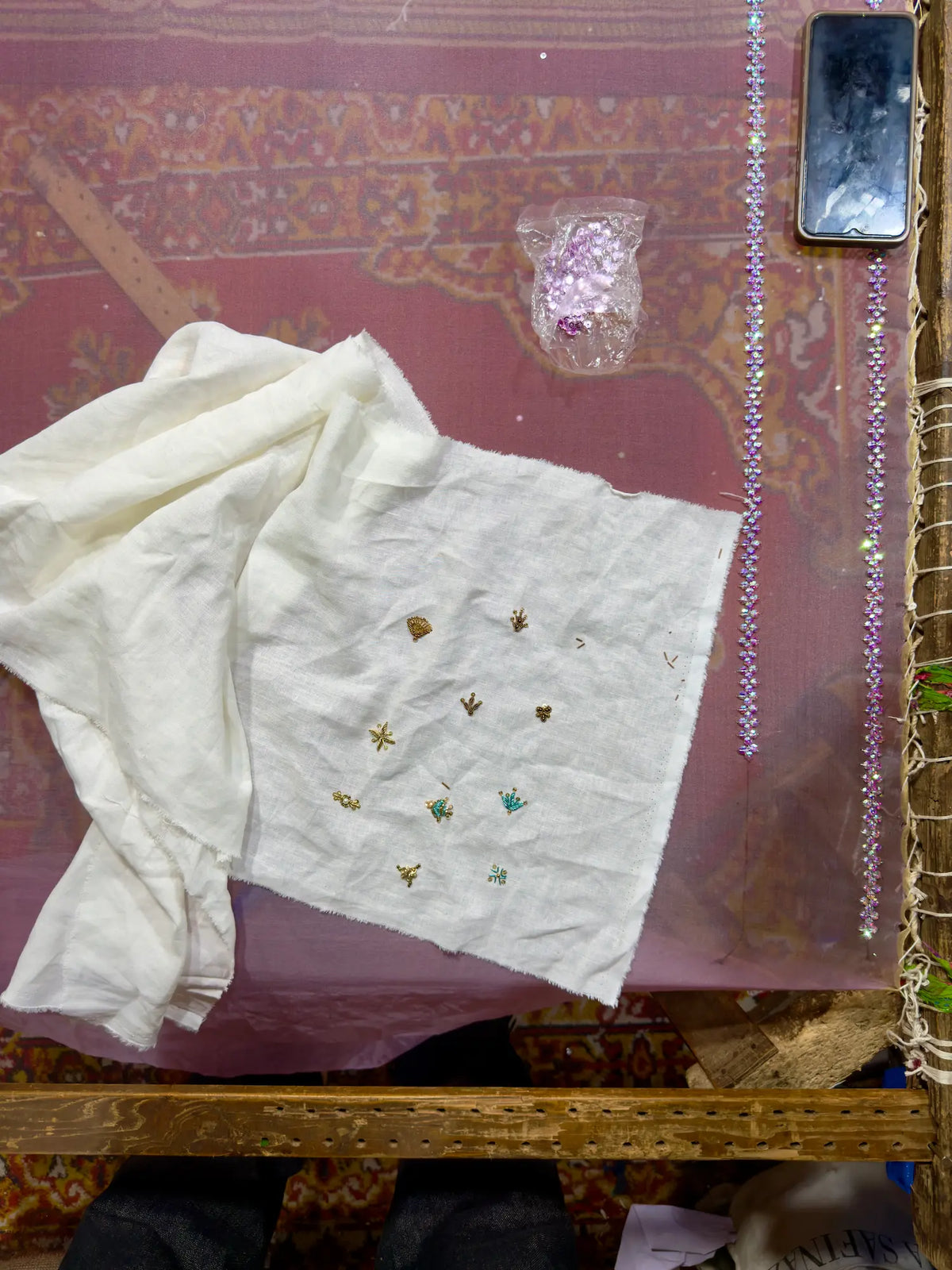
Hand embellishment in South Asia runs back through centuries of court and bridal textiles, where beadwork and thread work were how status, occasion and region were read on cloth. The technique is unchanged: beads applied one at a time, by hand, onto stretched fabric.
What has changed is our use of it. Rather than the dense, full-surface embellishment the tradition is known for, we place it sparingly — reduced until the work reads as texture from across a room and as craft only up close. The beadwork on Osami pieces is by Haider Abbas Bajwa in Lahore.
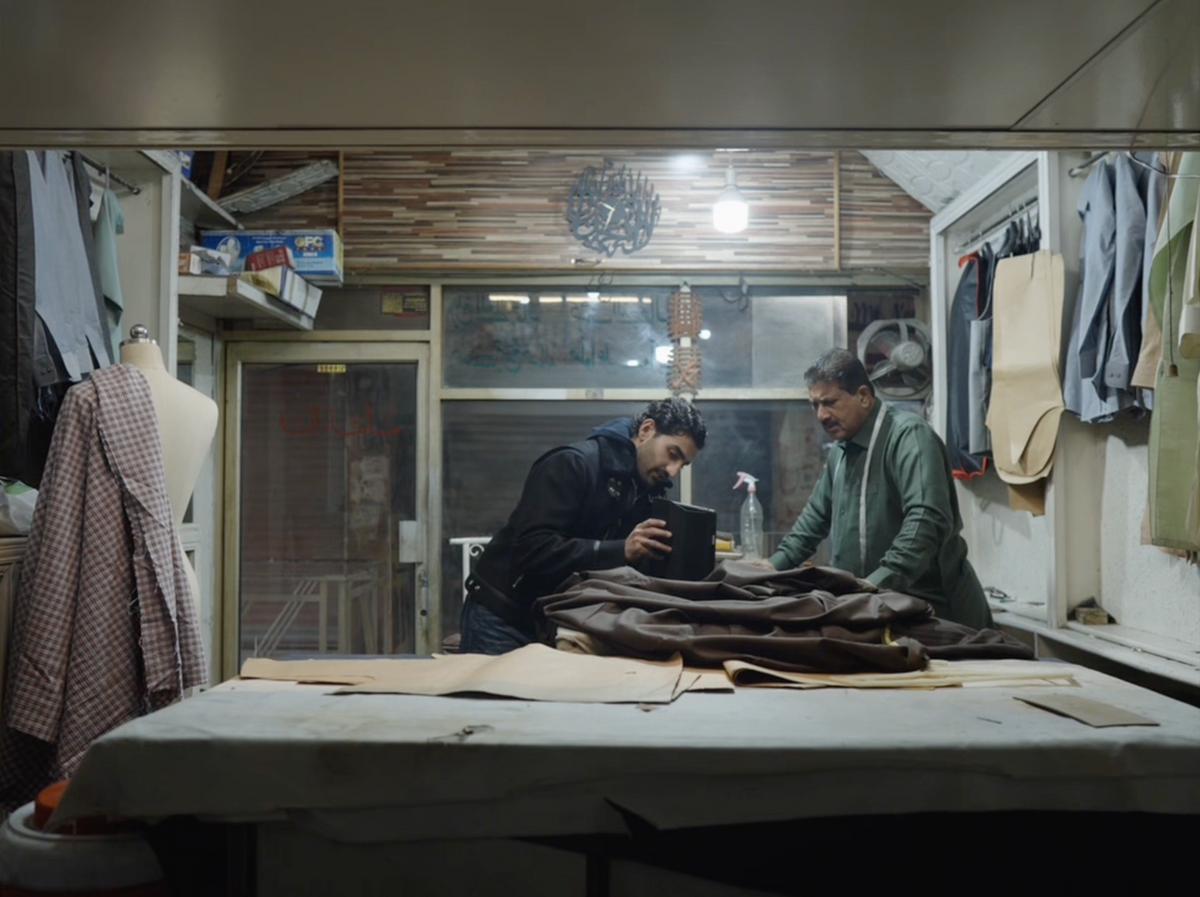
Finishing is the least visible craft and the one that determines whether a garment survives. Seams enclosed rather than raw. Threads cut by hand rather than left. Interiors treated as though someone will inspect them, because eventually someone does — the person wearing it.
In Lahore this work sits under Master Irfan, our production head. Nothing leaves the workshop without passing through his hands.
Contemporary Placement.
We work with block printing, hand beadwork and handloom weaving, introduced selectively into garments rather than treated as surface decoration. The technique matters. So does where it goes. A print under a collar and the same print across a chest are not the same decision, and they do not produce the same garment.
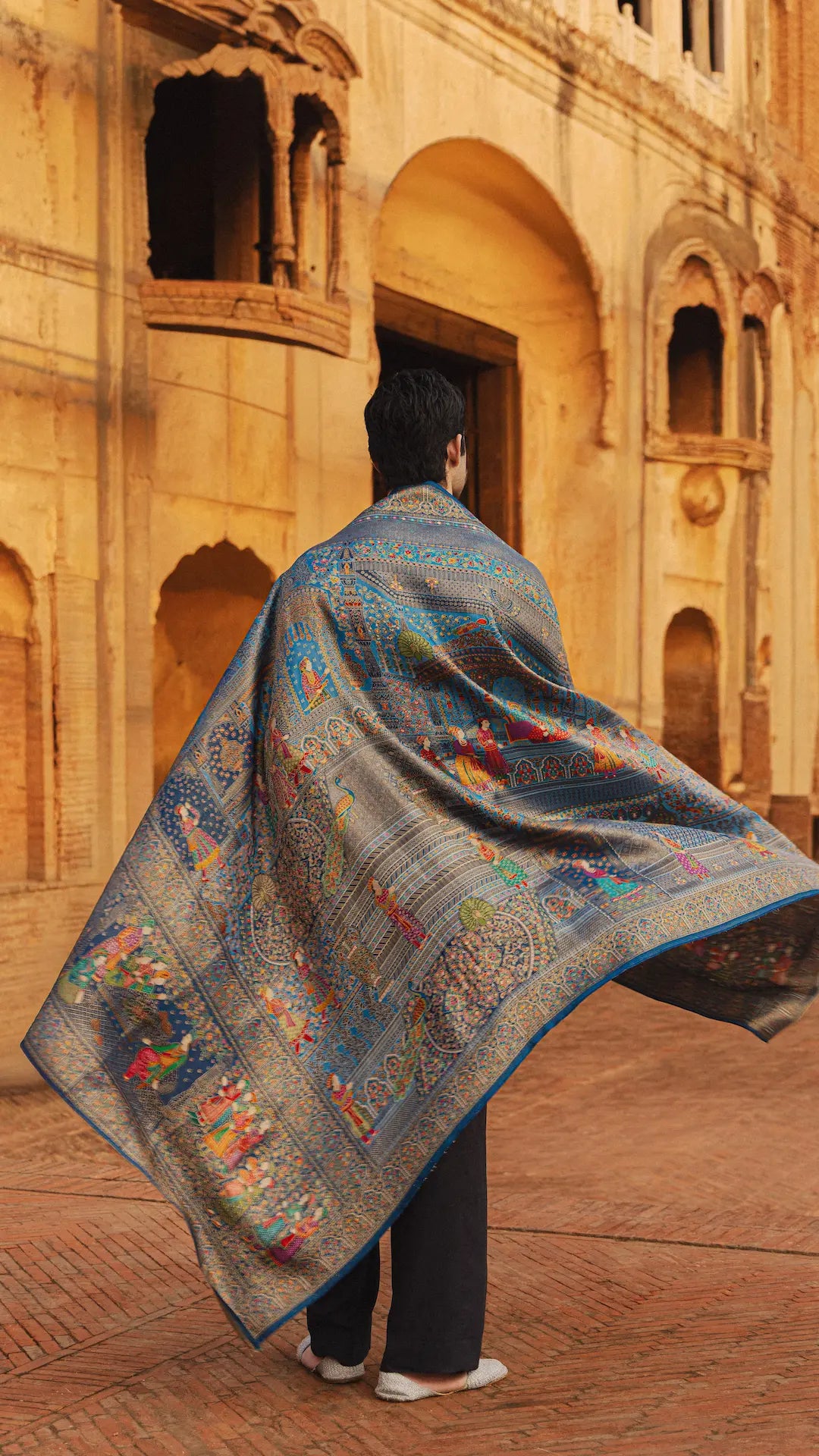
That decision only works if the people making it are the ones who understand the craft. Development and pattern-making by Muhammad Amin “Faisal”. Stitching under production head Master Irfan. Hand beadwork by Haider Abbas Bajwa. Block printing by Nassir Hussain. The pashmina wraps are woven on handlooms by a small group of Kashmiri artisans in northern Pakistan. Osama learned block printing from Shahid Imran.
No vague artisan language. If we name a craft, we name who made it — a person where the work is one person's, a place and a group where it isn't.