I said there’d be one more letter before the 17th, about what a house owes the place that makes its clothes.
That one comes Thursday. Today, I felt as if I needed to come out with this one because later today, you’ll be getting the first real look at what we made, and I’d rather you had this in your head before you look at it rather than after.
Here’s the thing I’ve been circling since August.
When you picture resort — the pool, the terrace, the long white afternoon, the man doing nothing extremely well — you’re not remembering a place. You’re remembering photographs. A fairly small number of them, taken by a fairly small number of people.
That canon has an author. Most people have never thought about who.
1. The man who decided
His name was Slim Aarons.
He enlisted in the US Army at eighteen and spent the war as a combat photographer, shooting for the military press. He saw what that work shows you.
Afterwards, he made a decision that turned into a fifty-year career: he would never photograph misery again. He’d photograph, in his own phrase, “attractive people doing attractive things in attractive places.”
So he did. Palm Springs. Capri. Portofino. The Amalfi coast. Gstaad in winter, the French Riviera in August. His pictures ran in Holiday and Town & Country and Life and Harper’s Bazaar, decade after decade, until the look he built stopped registering as a look at all and became the default setting for what wealth at rest is supposed to look like.
I’m not attacking the man. He was extremely good, his eye was real, and I understand why someone who photographed a war would spend the rest of his life pointing a camera at beautiful people being happy. There’s something almost moral in it.
But it was a decision. One person, deciding what was worth the film.
That’s the whole letter, really. Everything else is detail.
2. The most famous candid photograph of the century was staged
Palm Springs, 1970. Two women at the edge of a pool outside a modernist house, mountains behind them, the whole thing radiating a kind of unbothered ease that a million campaigns have been trying to reproduce ever since.
It looks like he wandered past and got lucky.
He didn’t. He arranged it. Positioned the women deliberately to catch the morning light, composed the frame around the architecture, and waited for the sun to do what he’d planned for it to do. He worked in natural light by principle — no flash — which is precisely why the results look “accidental”.
Let’s pause here and focus on that.
The most reproduced image of “resort” in twentieth-century photography was engineered down to the angle of the sun.
Effortlessness isn’t a quality that some people have and others don’t. It’s a construction. It requires a building, a person, a time of day, and somebody who has decided in advance that this is worth recording. Every single one of those is a choice, and choices have authors, and authors can be replaced.
3. The building was always half of it
Here’s the part that matters most for what you’ll see later today.
Aarons practised what is called environmental portraiture — the setting isn’t a backdrop but instead a co-subject. The desert house in that photograph is as much the point as the women in front of it. The villa, the terrace, the modernist glass, the mountain: the architecture is doing an equal share of the work of saying this is what a good life looks like.
Which means the resort canon isn’t only a canon of people. It’s a canon of buildings.
Mid-century modernism in the desert. Whitewashed stone on a Mediterranean cliff. A certain kind of pool, a certain kind of terrace, a certain quality of light falling on a certain kind of wall.
And once you notice that, the absence gets much more specific and much harder to explain. It isn’t only that South Asians weren’t photographed at rest. It’s that South Asian architecture — some of the most extraordinary architecture ever built for exactly this purpose, for shade and air and sitting still in heat — was never allowed to be the co-subject. Mughal builders spent centuries solving the problem of how to be at ease in a hot climate, in stone, at an enormous scale. None of it ever made it into the visual language of leisure.
Not because it wasn’t beautiful enough. Because nobody with a camera and a magazine contract was standing there.
4. Then it became infrastructure
In 1997, Getty acquired Slim’s archive.
That’s the moment the look stopped being one man’s body of work and became a resource — licensable, searchable, available to every art director building a mood board for a resort campaign.
Which is why every resort campaign you have ever seen looks like the same campaign. They’re all drawing from the same reference.
I don’t think this was a conspiracy of any sorts. Instead, I think it’s something more ordinary and harder to fix: a canon forms because somebody does the work, and then everyone after them uses it as a shortcut, and after a certain number of years the shortcut starts looking like reality.
That’s what a canon is. A set of decisions that has been repeated long enough to pass as a fact.
5. Go look at your parents’ photographs
Here’s the part where I'm going to ask you to do something.
Go find your family’s old pictures. The physical ones, if your parents still have them.
What you’ll find, if your family photos are anything like mine, is motion. Weddings, birthdays, dinners, get together’s, parties.
What you probably won’t find is anyone at rest. Nobody photographed on an ordinary afternoon doing nothing in particular. No pictures of your grandmother sitting in her courtyard in the heat with a fan in her hand, dressed the way she always dressed, on a day that wasn’t about anything.
That afternoon happened thousands of times. It was just never worth the film — because film was expensive back then and because photography was primarily for occasions, and perhaps even because nobody had told us that an ordinary hour of a brown family being comfortable was a thing anyone would want to look at later.
So the absence isn’t just in the archive at Getty. It’s also in our own parents’ archive.
And that’s the thing I understood in this campaign: the gap was never a lack of leisure. It was a lack of documentation.Two entirely different problems. One of them takes generations to solve. The other one takes a camera, a building, and someone deciding it’s worth it.
So that’s what we did.
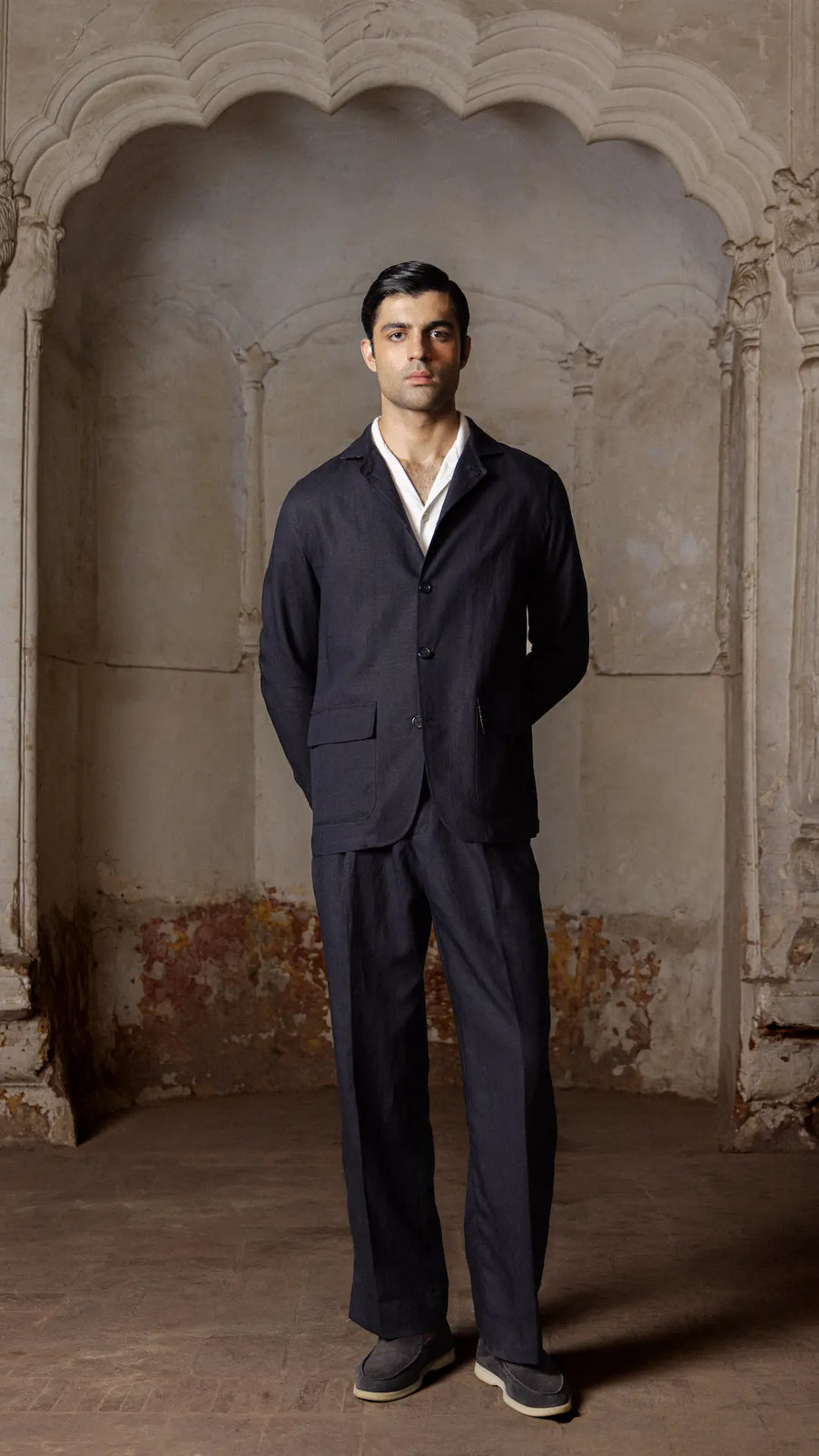
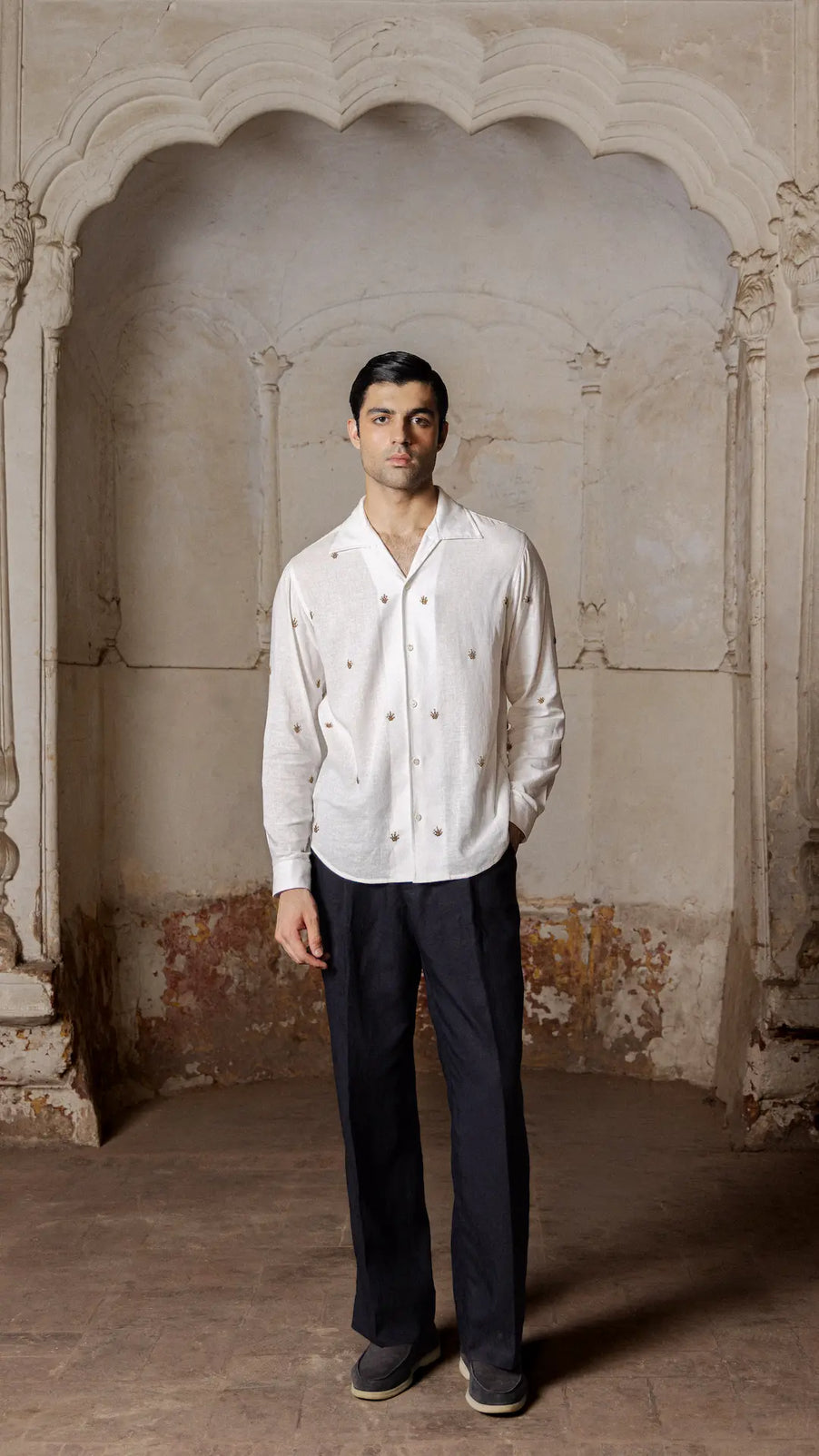
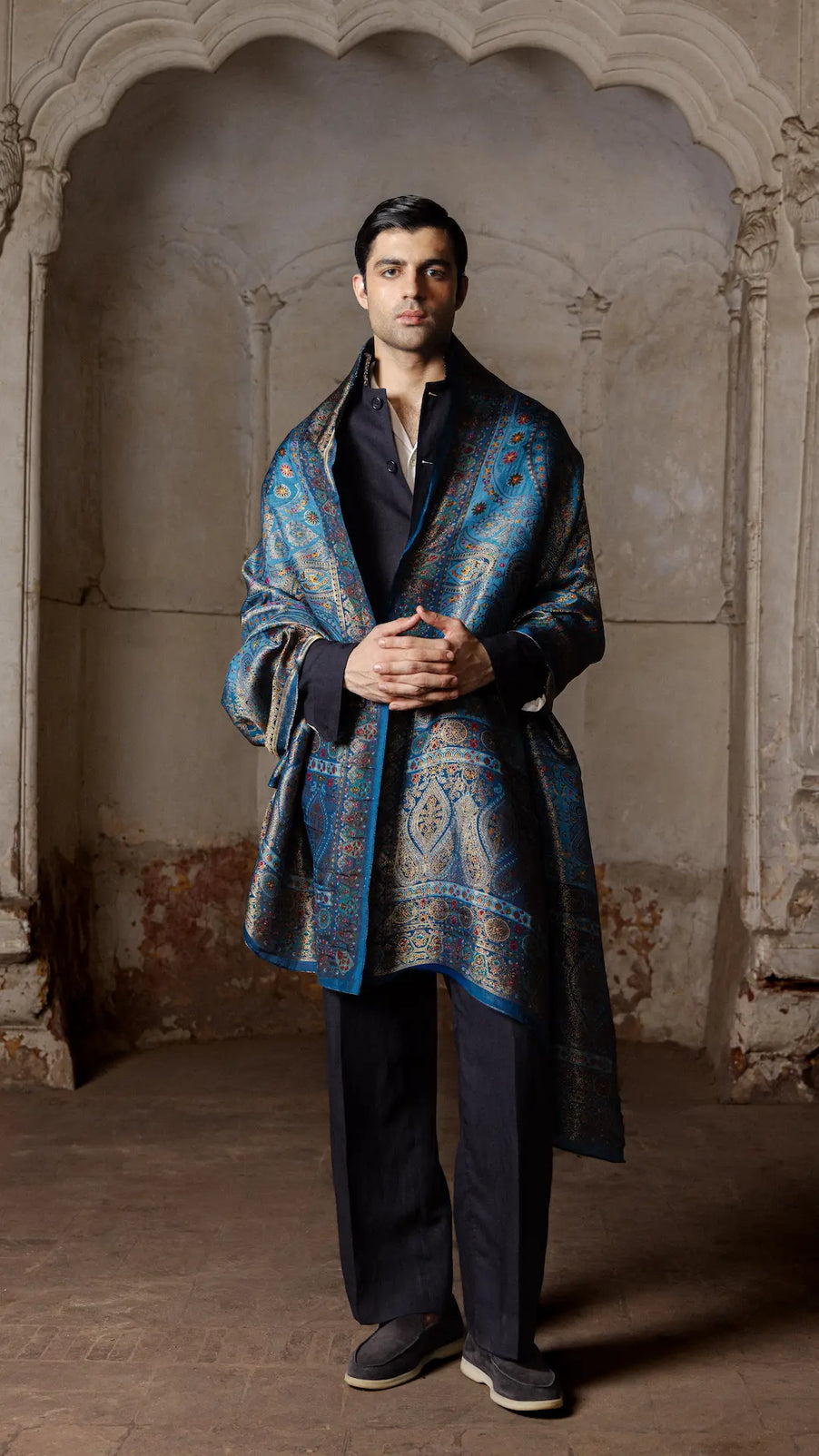
We shot Lahori Riviera in Lahore, against Mughal architecture. Not as a location, in the sense of somewhere convenient with good light. As a co-subject — the same way the desert house is a co-subject, the same way the villa is. The building is making half the argument.
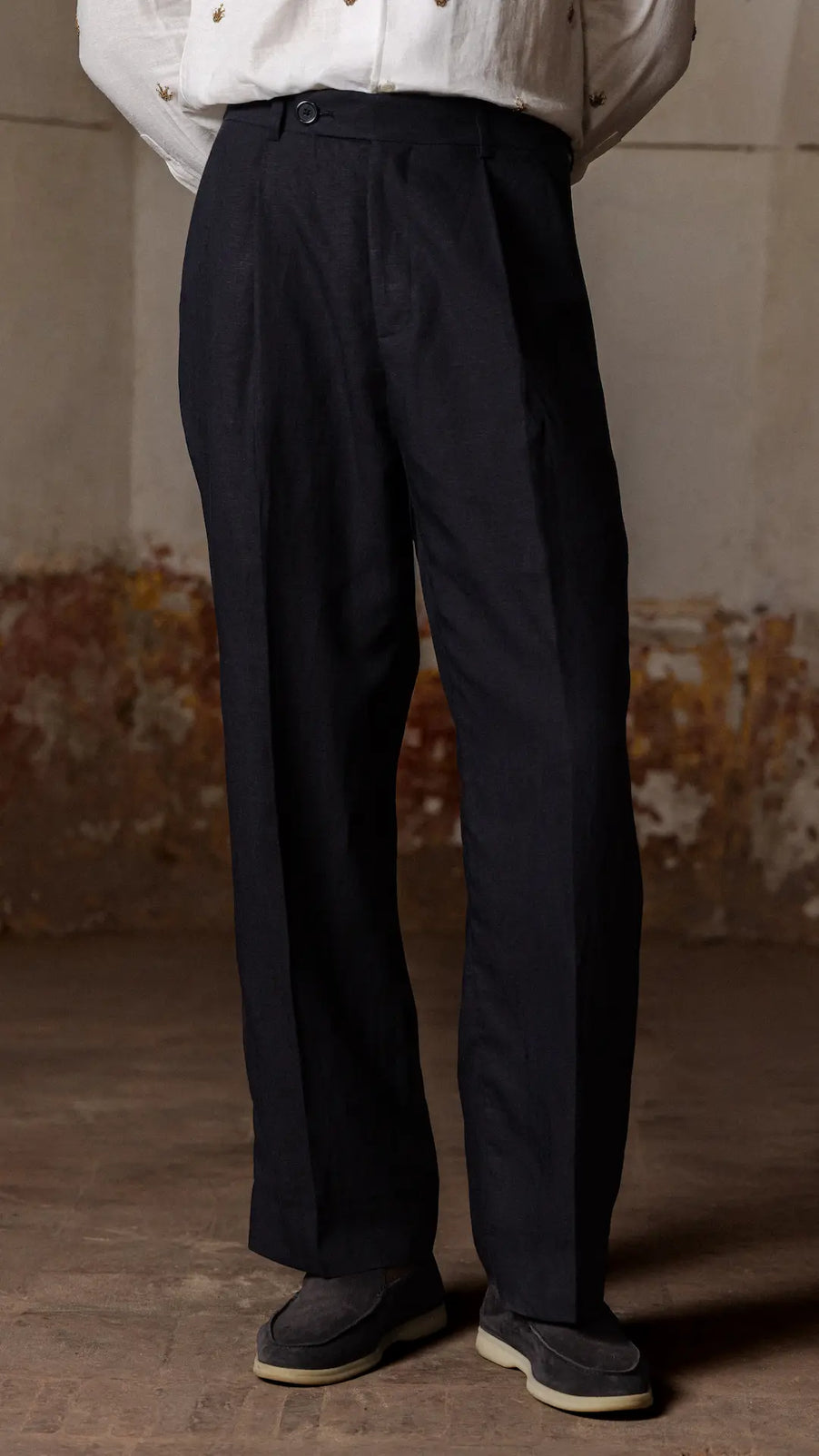
The clothes are a luxury silhouette by any Western measure, cut with the restraint you’d expect from anything in that tradition. Put in front of that stone, they stop reading as Western at all. That’s not a trick of styling. It’s what happens when you finally place something in the setting it was always answering to.
We’re using the canon’s own method. Environmental portraiture, natural light, a person at ease, a building doing half the work. Same technology, pointed somewhere it never got pointed.
Today, you’ll see the first of it. It’s wide, and it’s slow, and there’s more architecture in it than clothing, but that’s deliberate.
Lahori Riviera arrives Thursday, September 17. Get on the list at osamiofficial.com and you’ll have access before anything opens publicly.
And on Thursday, the letter I actually promised you — about what this house owes Pakistan.
Shukriya for reading. Go take a picture of someone you love doing nothing.
— Osama