Two letters ago I gave you a rule and then didn’t apply it to myself.
The rule was this: if it needs explaining to work, it’s costume. If you’d wear it in a room where nobody was watching, it’s yours.
So I went and looked. Actually looked — at what I reach for when there’s no shoot, no dinner, nobody to register the decision. What’s worn soft at the hem. What I’ve replaced twice because I wore the first one out.
The answer is a pair of Uniqlo trousers.
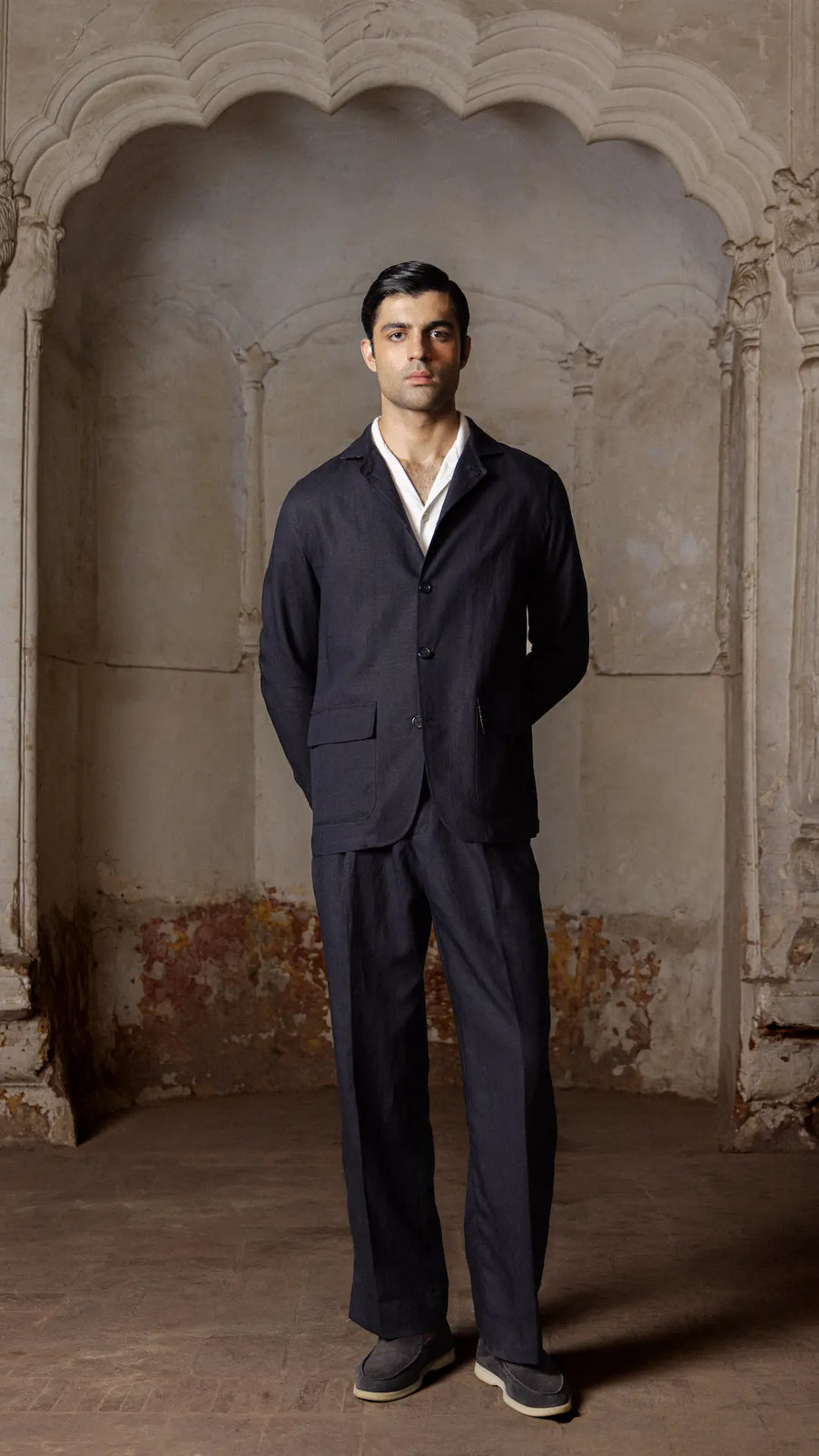
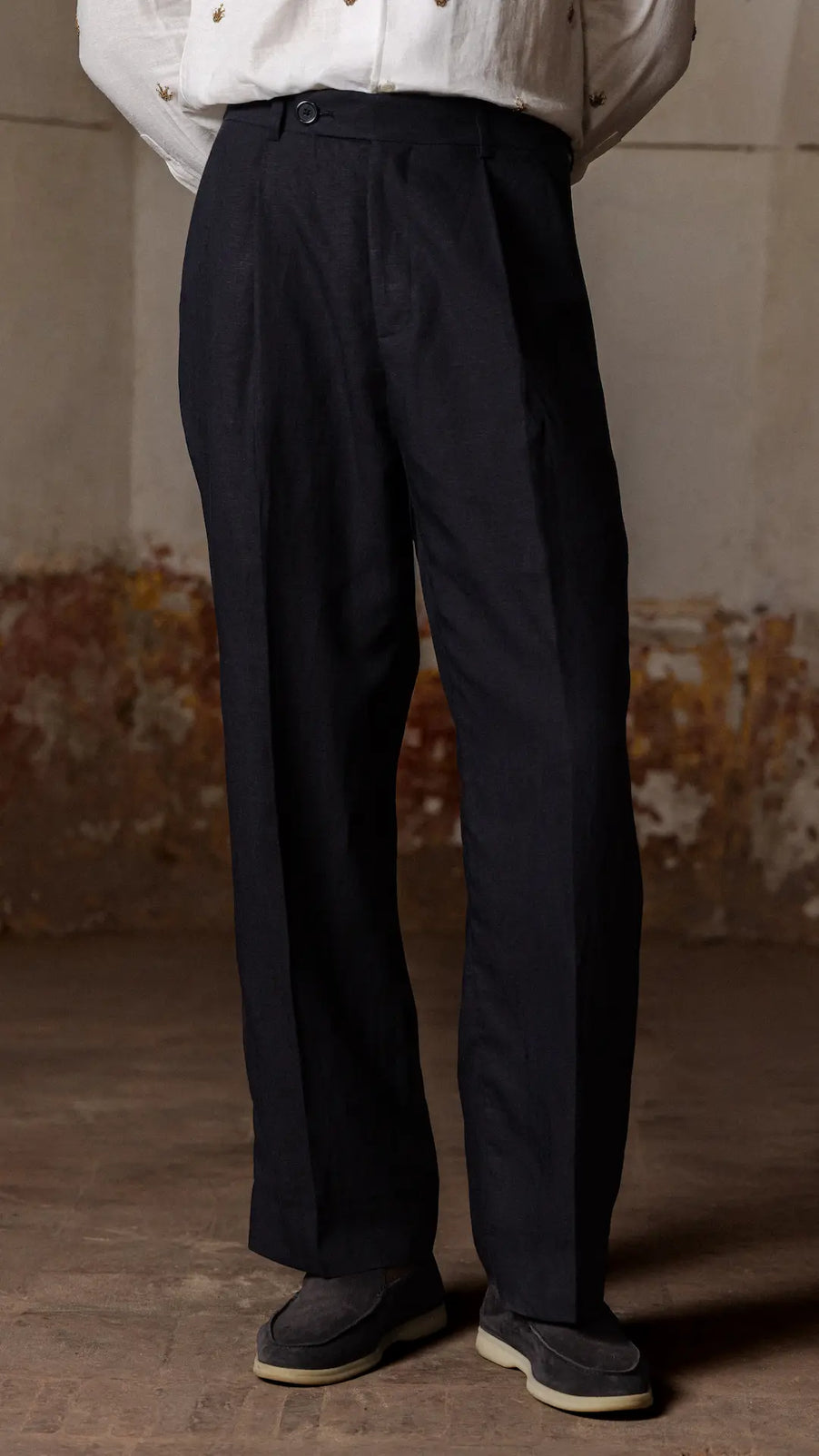
Not a single thing I own that photographs well. Not anything with a story I could tell you at a party. A wide-leg, single-pleat trouser I bought a couple of years ago for less than the cost of a dinner, which has quietly become the most-worn item in my life while I was busy building a luxury fashion house.
I sat with that for a while. Then I realised it was the most useful thing I’d learned all year.
1. What the trousers actually do
Here’s what took me a while to work out: they’re not my favourite thing I own. They’re my base layer.
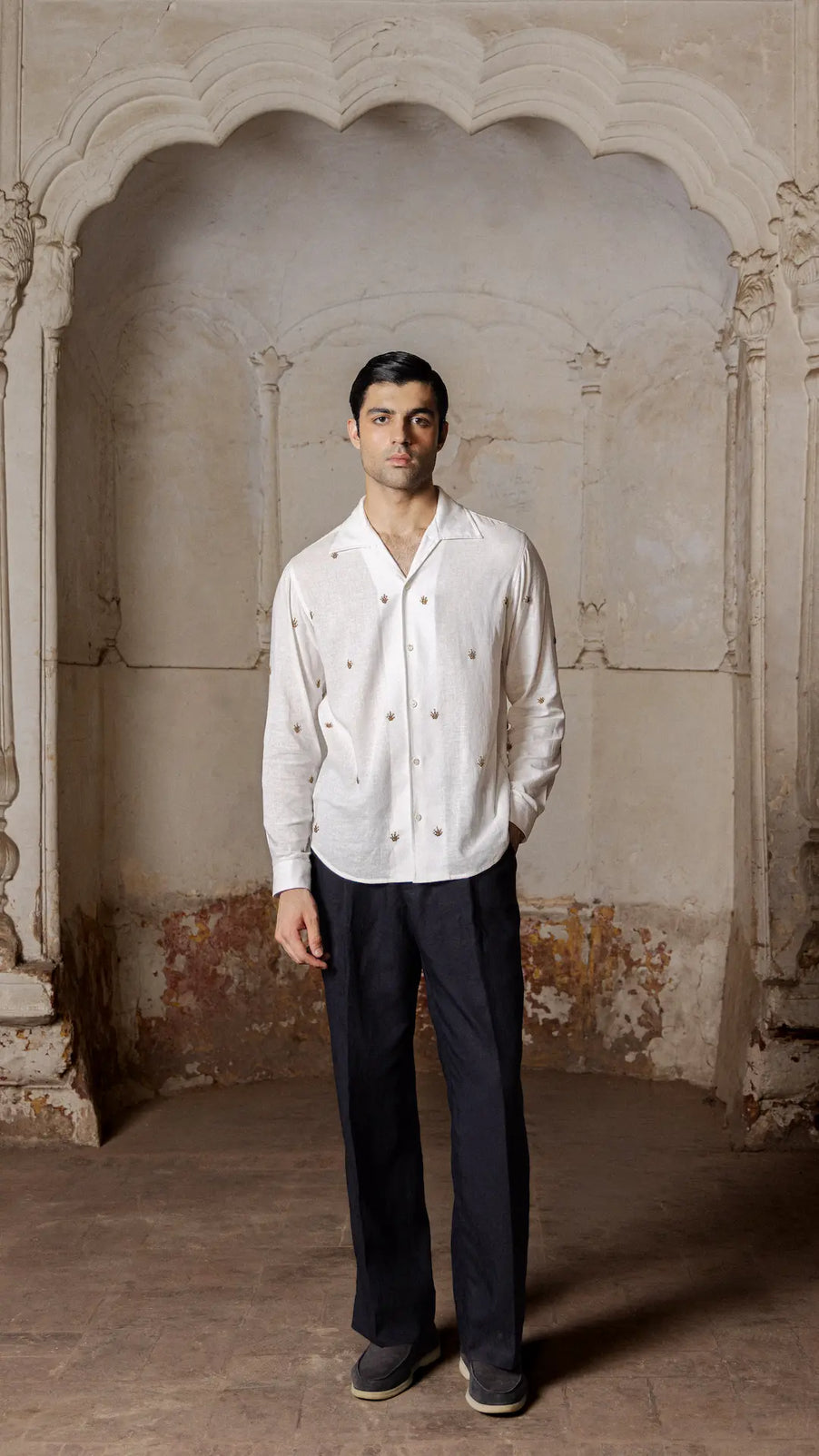
Not in the thermal sense. In the sense that they’re the constant I build everything else on top of. Same trouser, different shoes, and the hem breaks differently — stacks on a heavier boot, floats over something low-profile, and the whole line of the leg changes. Same trouser, different top, and the proportion reorganises around it — cropped and the silhouette goes sharp, longer and it goes soft.
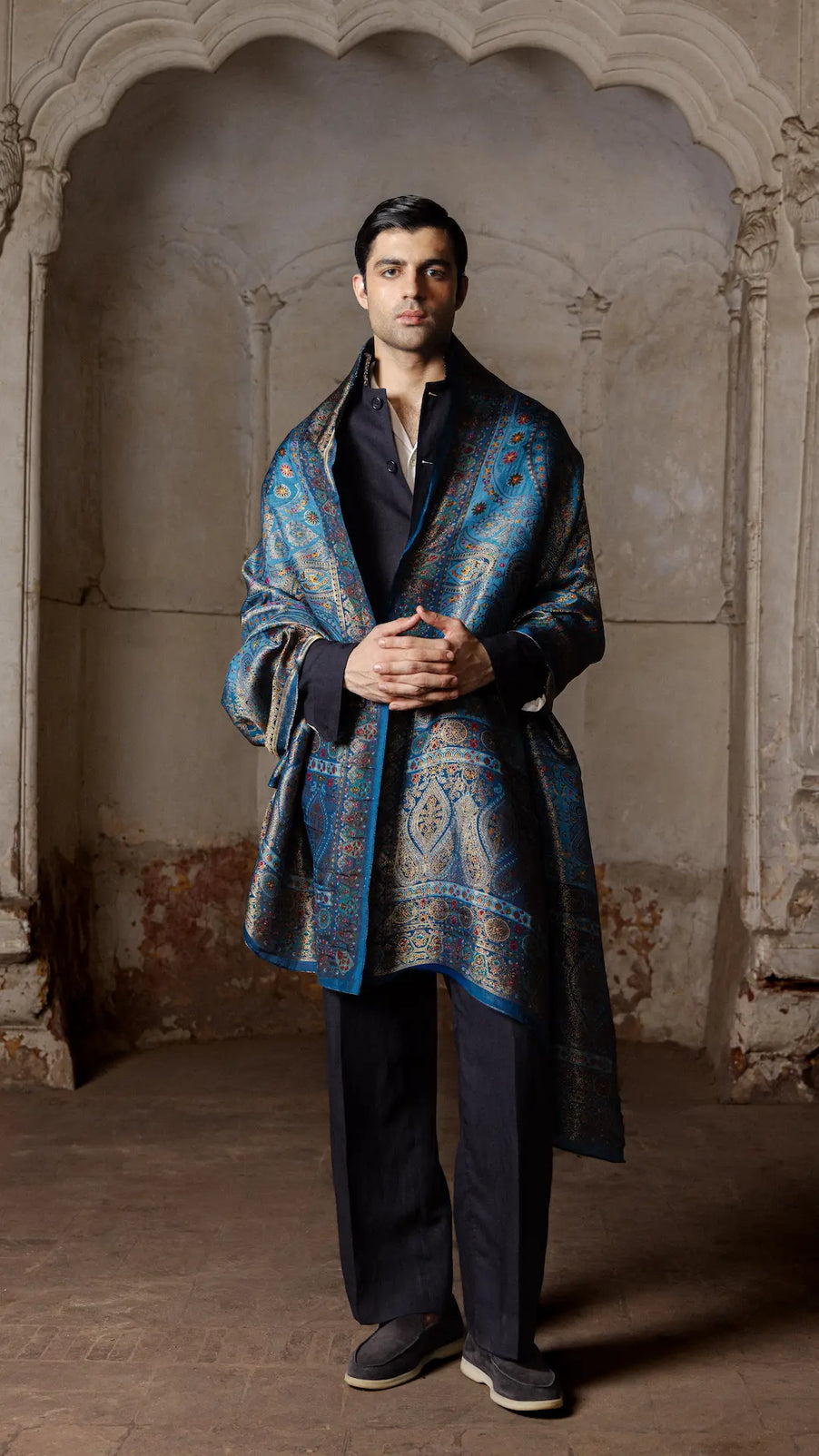
I can dress them up until they hold their own at dinner. I can dress them down until they disappear on a Tuesday. I’ve worn them to things I cared about and things I didn’t, in two countries, in both weathers.
One garment. Ten versions of me.
And that’s the part that matters, because it isn’t a story about a trouser. It’s a story about what a wardrobe is actually for.
I used to think style meant having the right piece for each occasion — a closet of correct answers, one per room. That’s an expensive way to think, and it doesn’t work, because you end up owning forty things and wearing six. The pieces that survive aren’t the ones with the strongest opinion. They’re the ones flexible enough to let you have the opinion.
The good stuff doesn’t tell you who to be. It lets you decide, daily.
2. The voice
Now the harder half.
Because a base layer only solves the mechanics. It doesn’t touch the actual problem, which for me has never been what’s in the closet. It’s the thirty seconds in front of the mirror before I walk out.
There’s a voice that runs in there. I’d guess you have your own version.
Mine asks three questions, in the same order, every time.
Too Pakistani for this room?
Too whitewashed for this one?
Too fashionable for a straight guy?
That’s it. That’s the loop. And I’ve been running it long enough that it’s stopped registering as a thought — it’s just the weather in my head while I’m choosing a shirt.
I want to name something about that third one, because it’s the one I’ve never written down. Every man I know who genuinely cares about clothes has some version of it, and none of us talk about it. There’s a ceiling on how much attention a straight man is supposed to pay to how he looks, and you learn where it is early, and you learn it by getting it wrong in front of people. So you develop an instinct for staying just underneath it. Interested, but not too interested. Put together, but not like you tried.
In the last letter I admitted I built a brand pillar around challenging masculine dress codes because a TikTok performed well — and that the problem wasn’t the idea, it was that I hadn’t arrived at it honestly.
This is the honest version. I don’t have a position on masculine dress codes. I have a voice in my head that polices me against them, and it’s been there since long before I had a brand.
3. Too much, not enough
The first two questions are the between-worlds problem, and they’re a trap with no exit.
There’s a conversation that usually gets had about women — too modest, or not modest enough, and no available reading that isn’t a judgement. I’m not claiming the same stakes; the consequences aren’t comparable and I’m not going to pretend otherwise. But there’s a quieter male version of it that nobody bothers to name, and if you were raised between two places you already know exactly what I’m describing.
Some rooms, you’re too much. I’ve walked into places wearing something that was genuinely good and watched it land as what is he wearing. Not hostile. Just a small recalibration happening on someone’s face while they decide what to make of you.
Other rooms, the problem is the opposite, and it’s stranger. Nothing overtly ethnic on my body at all — and somehow carrying yourself as unmistakably Pakistani is itself the thing that’s read as too much. That one took me years to understand, because there’s nothing to point at. There’s no garment to blame.
So you learn to pre-solve it. Split the difference. Land somewhere safely between the two failures, which is the one place guaranteed to be nobody’s idea of good.
That’s the tax. Not money. Attention — a portion of your head permanently rented out to a room you haven’t walked into yet.
4. Only one of these is the clothes’ fault
But here’s the thing I’ve had to be honest with myself about, and it’s the reason this letter isn’t just a complaint.
I’ve gotten dressed badly two different ways, and I used to file them under the same heading.
One: I misjudged the room. Did too much. Wore something that was correct for a different night and wrong for this one. That’s a real error, it’s fixable, and honestly it’s a cheap lesson — you get it once and you recalibrate.
Two: I misjudged myself. The fit was right. The fit was good. And I walked in without carrying it — shoulders slightly apologetic, already half-agreeing with whatever the room might think. And a good outfit worn apologetically doesn’t read as a good outfit. It reads as a costume, because the wearer is visibly negotiating with it in real time.
Those look identical from outside. Both of them end with you feeling wrong in a room. But only the first one is about clothes.
The second one is the whole game, and no purchase has ever fixed it for me.
5. Style is earned
I wrote that line in January and I don’t think I understood it properly at the time. I meant something about taste developing slowly. Fine, true, a bit soft.
Here’s the version I’d write now.
The voice doesn’t go away. I’ve been doing this a long time and it still runs the same three questions in the same order. What changes is your relationship to it. It goes from being the judge to being an advisor — and a genuinely useful one, because it’s the thing that stops you walking into your cousin’s mehndi dressed for a gallery opening. Room-reading is a skill. That voice is where it lives. I don’t want to lose it.
What it doesn’t get is the final say.
And what buys you that — the ability to hear it, consider it, and overrule it — isn’t a better wardrobe. It’s repetition. Wearing the thing, badly, in the wrong room, surviving it, and going again. Style is earned in the sense that you pay for it in small embarrassments, and there’s no way to shortcut the bill.
Which is why I keep coming back to those trousers.
They’re not good clothes. They’re a rehearsal space. Cheap enough that I was never precious about them, flexible enough that I could test ten versions of myself without buying ten wardrobes. Every bit of confidence I have about how I dress got worked out on top of that one pattern.
The first thing I made for this house is a trouser. Wide leg. Single pleat.
Not because it’s the obvious hero piece — it isn’t, and a shirt would have been easier to sell. Because it’s the piece I could not stop wearing, and building the version I actually wanted, at the quality I actually wanted, in a fabric that makes sense in Lahore in June and Los Angeles in September, is the most honest thing I could have started with.
Same base layer. Made properly this time.
September. That’s when the first pieces go up. I’ll write more about what they are between now and then.
If you want to be closer to it than a letter allows, Osami & Friends is where that happens.
Otherwise — go enjoy your chai. And wear the thing.
— Osama