There’s a moment in every family conversation where the English runs out.
I can almost watch it happen in real time. The conversation is moving along in whatever mix we normally use — English structure, Urdu wherever it’s faster — and then somebody starts telling a story about Nani, or repeating something Dada used to say, and the whole thing switches. Fully. And nobody stops. Nobody turns to the room and explains what the phrase means. Nobody finds the English equivalent, because there isn’t one and everyone knows it, and reaching for one would ruin it anyway.
I’ve been watching for the pattern in when this happens, and it’s consistent: it happens when the subject is inherited. Family stories. Something said once by a member of the previous generation that got repeated until it became law. The lessons that came down through my parents from their parents. Those are the moments where the language locks in, because those sayings are already exactly what they are, and translating them would only make them smaller.
I think about this a lot now, because it turns out I’ve been doing it to you for three letters.
Aangan. Shukriya. Chai. Inshallah. I’ve never once stopped to define any of them. That wasn’t a stylistic decision — I didn’t sit there weighing whether to gloss. It just didn’t occur to me, because that’s the register I write in when I’m being honest, and the register assumes you’re in the room with me.
Which is a good place to start, because this week I want to talk about the difference between inheriting something and borrowing it. And about the two years I spent getting that wrong.
1. Fusion is a translation problem.
Here’s my issue with fusion as an idea, and I want to be precise about it because it’s easy to sound like I’m critical of a whole category.
Fusion assumes an outsider. It’s built for someone standing outside the room who needs the reference explained to them. And you can always tell, because fusion pieces arrive with their own caption attached. It’s a varsity jacket, but the back panel is a Mughal miniature. It’s a hoodie, but there’s truck art across the chest. The sentence is doing the work. Take the sentence away and the object doesn’t hold. The tell is the word but.
That’s the mechanism behind why fusion so often reads as costume. Not because the references are wrong, and not because the craft is bad — a lot of it is beautiful. It’s because the garment is addressed to a viewer rather than worn by a person. It needs an audience to complete it. Something that requires an audience to make sense is, definitionally, a costume.
The last letter argued that we kept the clothes and lost the picture. This one is about what happens when you try to take the picture back and get it wrong — which I have done, at length, on my own body.
2. I wore a costume for two years.
Not a garment. A thesis.
Here’s what actually happened. Early on, one of my TikToks did well. Better than the others, by enough that I noticed. It was about challenging traditional masculine dressing — playing against the expectations of how a Pakistani man is supposed to present himself.
And I did what a lot of founders do, which is treat a performance spike as a discovery about myself/the brand. I took that video and reverse-engineered a brand pillar out of it. Wrote it into the deck. Made it a thing Osami stood for. And then, because I’d made it a thing Osami stood for, I started dressing that way.
So there I was, in fits built around a position I had not actually arrived at — putting on clothes every morning that were making an argument on behalf of a pillar I’d derived from an engagement number.
I want to be careful here, because I’m not saying the idea was wrong. Challenging how men are supposed to dress is a real position, and there are people doing it with total conviction and getting somewhere serious with it. I have a lot of respect for that work. The problem was never the idea.
The problem was provenance. I didn’t get there. I got told there by an algorithm, and I went.
And that’s exactly the thing I described in the first letter — running a content calendar designed for a feed I don’t respect — except worse, because it hadn’t stayed in the content. It had gotten into the wardrobe. I was wearing the strategy. In January I wrote that some of my best-photographing fits from that period felt like a costume on my body, and I couldn’t work out why at the time. This is why. A borrowed thesis needs subtitles the same way a fusion jacket does. I was wearing something that only made sense if you’d seen the deck.
3. What you inherit doesn’t need translating. What you borrow does.
That’s the whole distinction, and it took me an embarrassingly long time to be able to say it in one sentence.
Go back to the family room. The language switches to Urdu precisely when the subject is something that came down — a saying, a story, a rule Dadi laid down forty years ago. Nobody translates, because there’s no outsider being addressed. The room already knows.
Borrowed things are the opposite. Borrowed things arrive with an explanation attached, because they have to. They were acquired from somewhere else and the explanation is how you carry them.
Both of these are fine, incidentally. I’m not building a purity test. I’ve borrowed a lot and I’ll borrow more; almost everything worth wearing came from somewhere else originally. The point isn’t that borrowing is illegitimate. It’s that you have to be honest with yourself about which one you’re doing — because the two require completely different things from you, and they produce completely different objects.
Inheritance can be quiet. Borrowing has to announce itself.
4. So: remix.
This is where I land, and it’s the pillar I actually believe in most.
A remix isn’t a blend. That’s the part people get wrong about the word. Nobody flipping a sample thinks of themselves as combining two genres — they’re claiming a line back to something and then doing their own thing with it. The source is a lineage, not an ingredient. And the result isn’t a hybrid; it’s a new thing that couldn’t have existed without the old one.
Same as the way we talk. A third culture kid doesn’t fuse two languages. He speaks one register that contains both, and it’s internally consistent, and it has its own grammar that neither parent language would recognise. It isn’t a mixture. It’s a dialect. If you’re in it, it’s completely fluent. If you’re not, it sounds like two things at once — but that’s a limitation of the listener, not a property of the speech.
That’s what I mean by remix. Not East and West combined. One thing, spoken fluently, by someone who inherited both and never had the option of picking.
5. The costume test.
Which gives me a rule I can actually use, and it’s simple enough to apply in a fitting.
If it needs over-explaining to work, it’s costume. If you’d wear it in a room where nobody was watching, it’s yours.
And here’s where it stops being philosophy and starts being a construction decision.
Put the detail under the collar. Inside the cuff. In the lining of a pocket. In the facing that only shows when you turn back a sleeve.
That placement isn’t a taste preference, and I’ve explained it badly in the past by talking about restraint, which made it sound like an aesthetic mood. It’s a logical consequence of everything above. A detail nobody can see cannot be a costume, because a costume requires a viewer, and there is no viewer inside your own cuff. The only person that detail is addressed to is the man wearing it.
Which means it can’t be performing anything. It can only be true or not true.
Someone’s going to raise the obvious objection, so let me get there first. I’ve just told you the tell is the word but — and I’m about to show you garments with block printing inside them. Isn’t that a jacket, but with block print?
No, and the reason is the whole thing. If the only connection between a garment of mine and Pakistan were a print hidden in a facing, that would be exactly what I’ve been describing — a Western jacket with a heritage sticker somewhere it’s harder to criticise. The print isn’t the argument. The cut is.
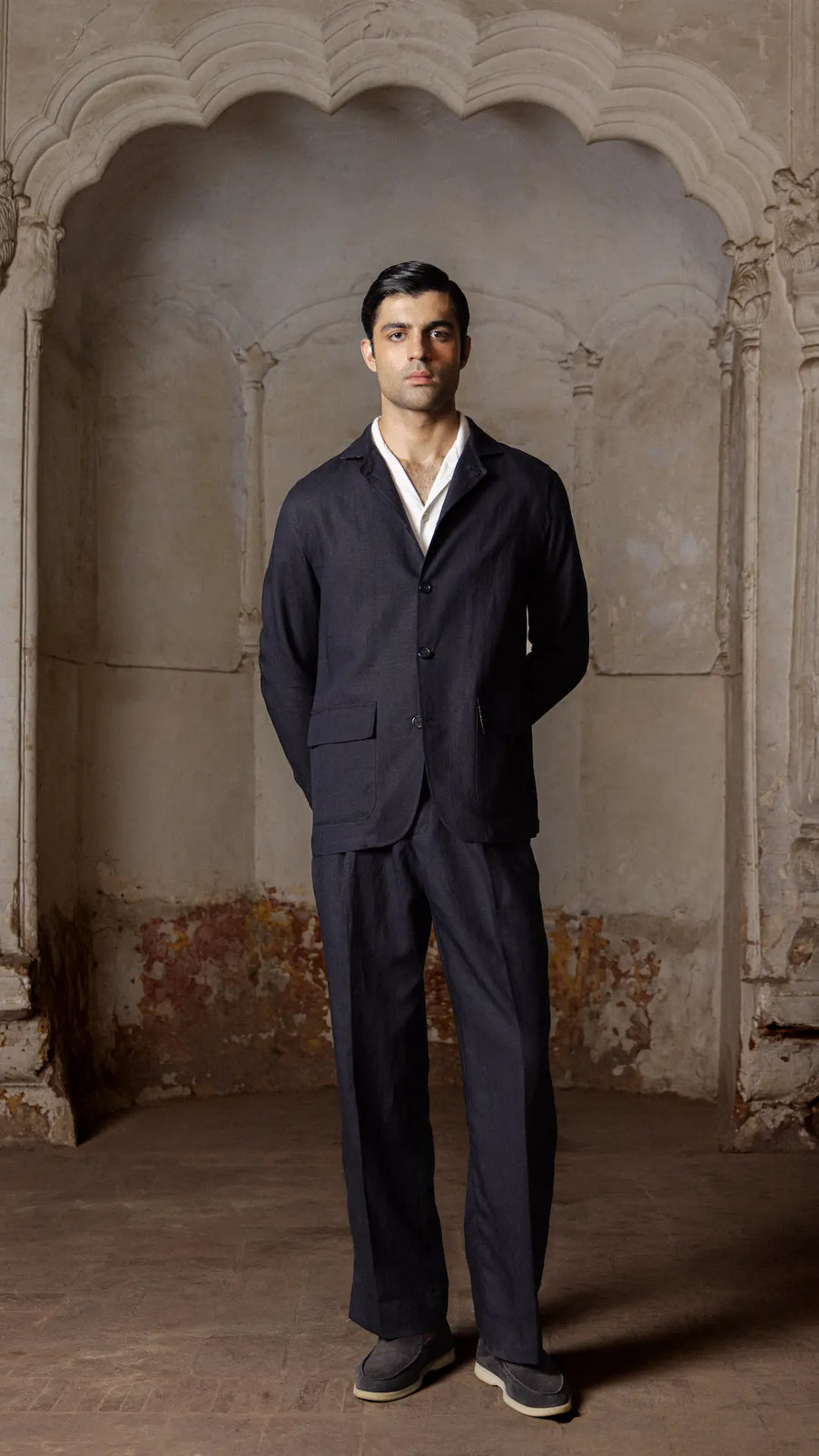
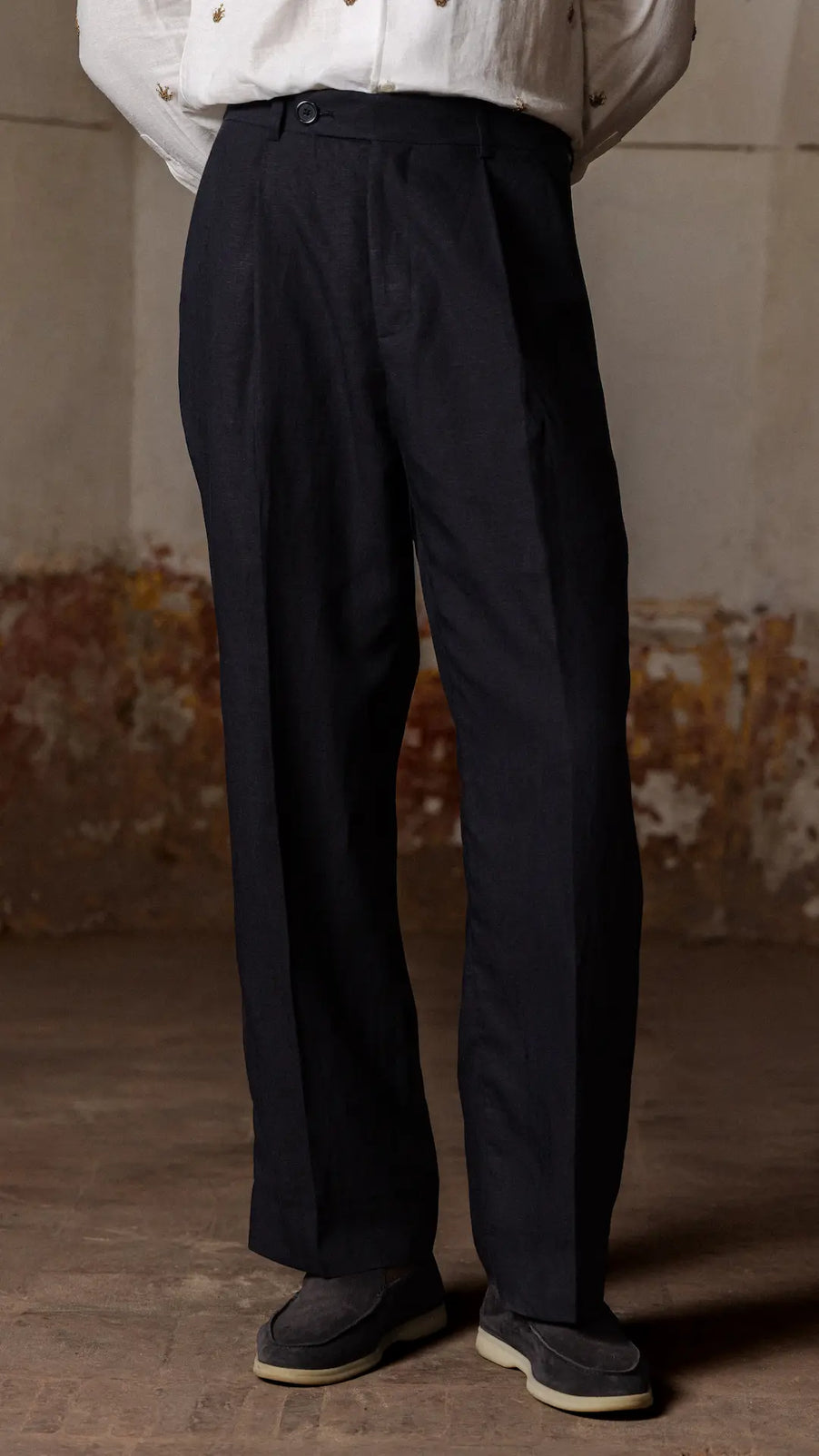
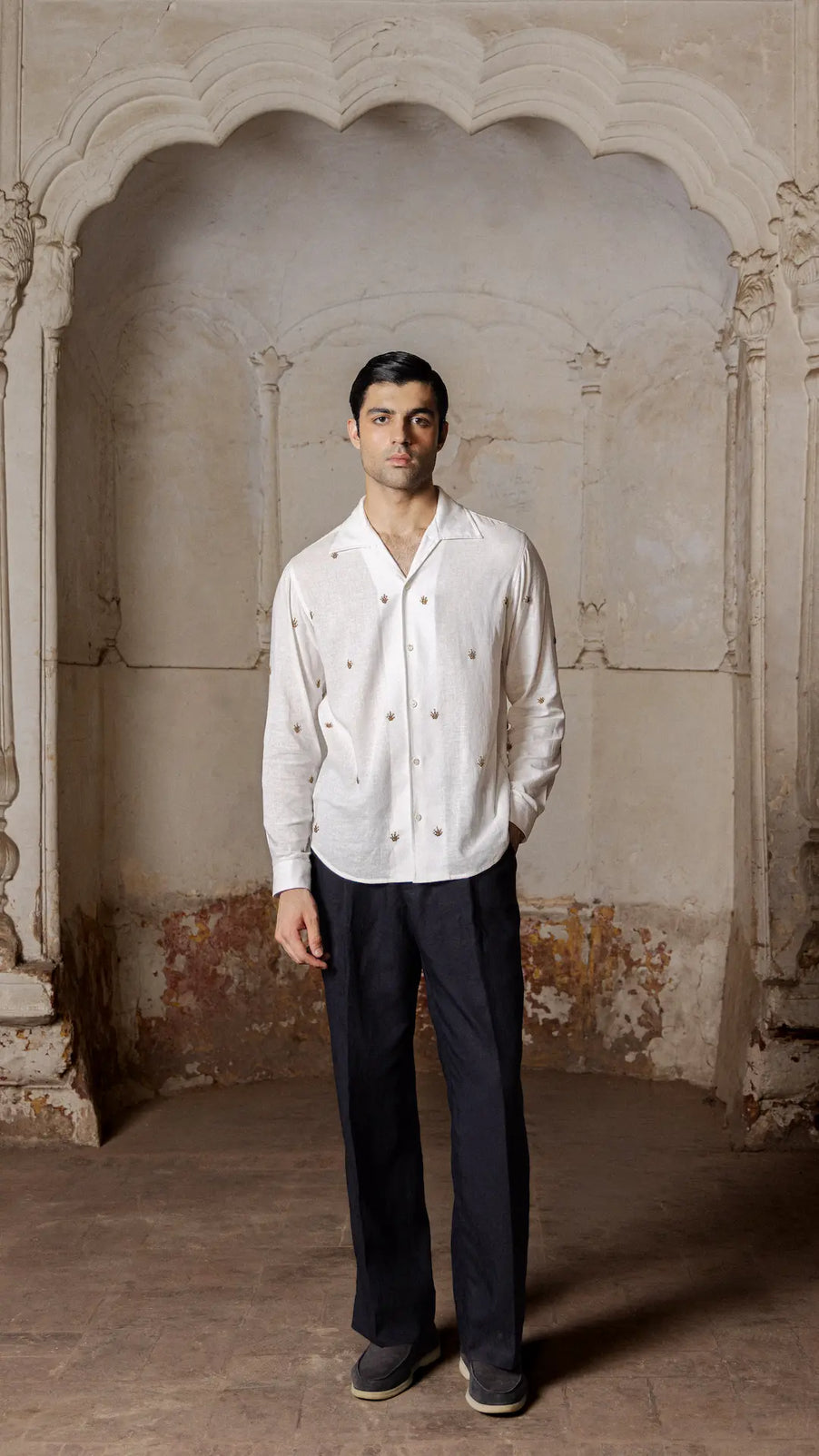
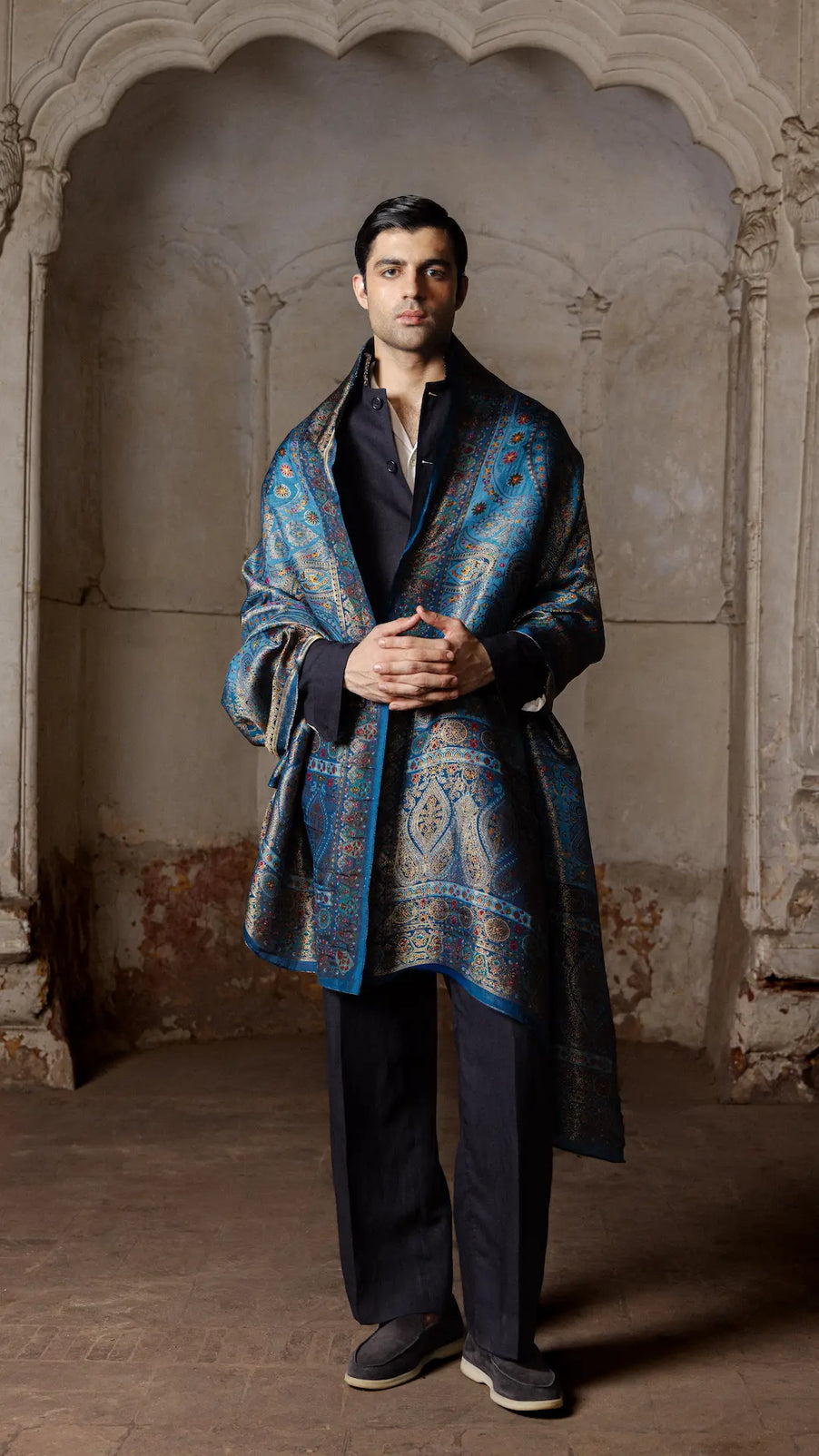
Loose. Light. Built to let air move instead of trapping it. That’s not a Western silhouette with an ethnic detail bolted on — it’s the same heat-dressing logic I spent all of last week’s letter on, made into something a man can wear on a Tuesday in Los Angeles. Take the printing out entirely and the garment is still Pakistani in every decision that matters: the volume, the weight, the drape, and the reason for all three.
The printing is a signature, not a thesis.
That’s the whole design philosophy, and I think it’s the first time I’ve been able to explain why rather than just assert it.
The full Osami documentary arrives next Monday the 17th. That’s the one major piece of content that’s been coming for a while, and for anyone who's been reading these, it's the closest thing to an answer for why I disappeared for seven months.
Until then: shukriya for reading in the register I write in, without ever asking me to translate.
If you want to be closer to this than a letter allows, Osami & Friends is where that happens.
Otherwise — go enjoy your chai.
— Osama