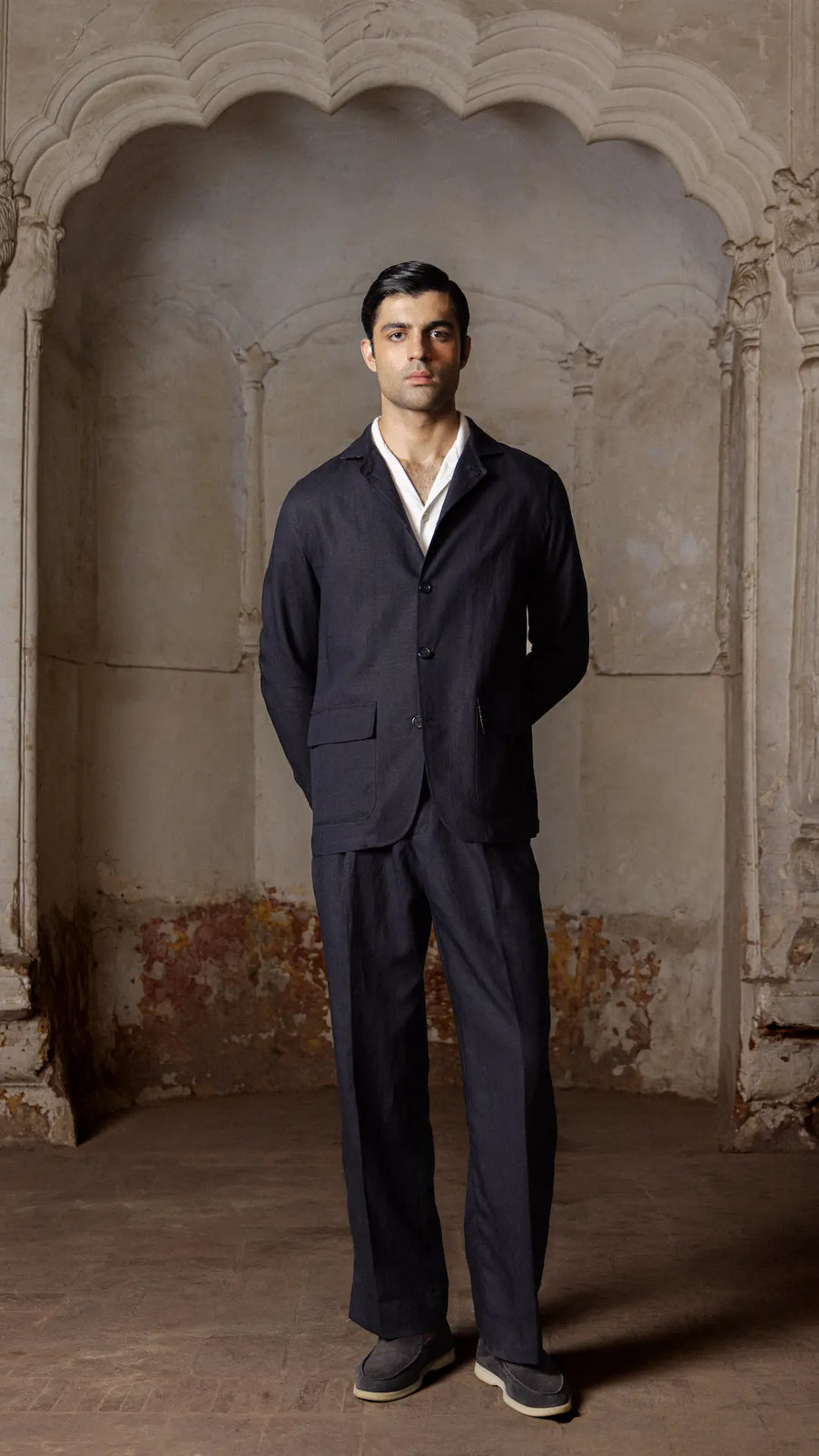
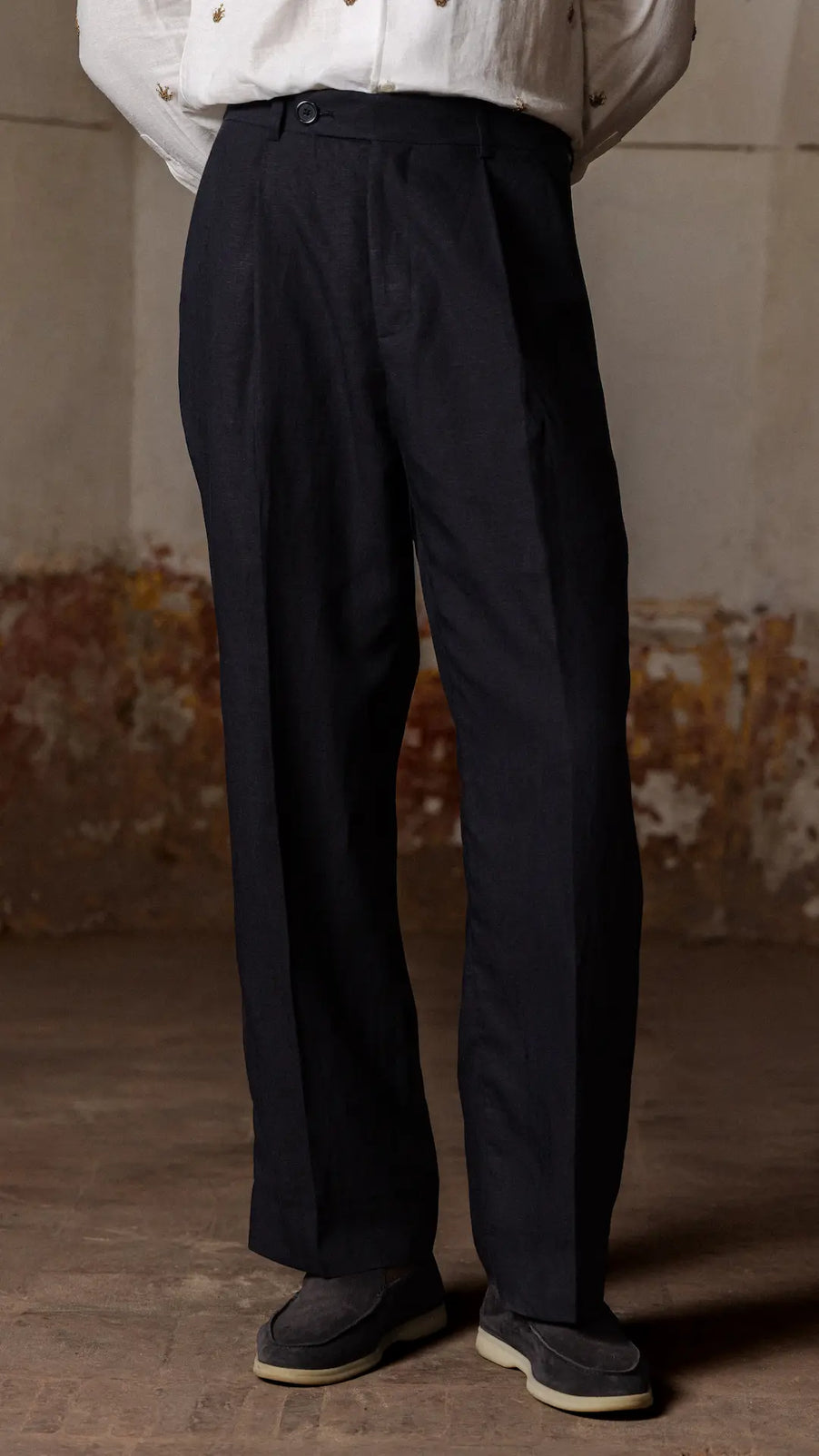
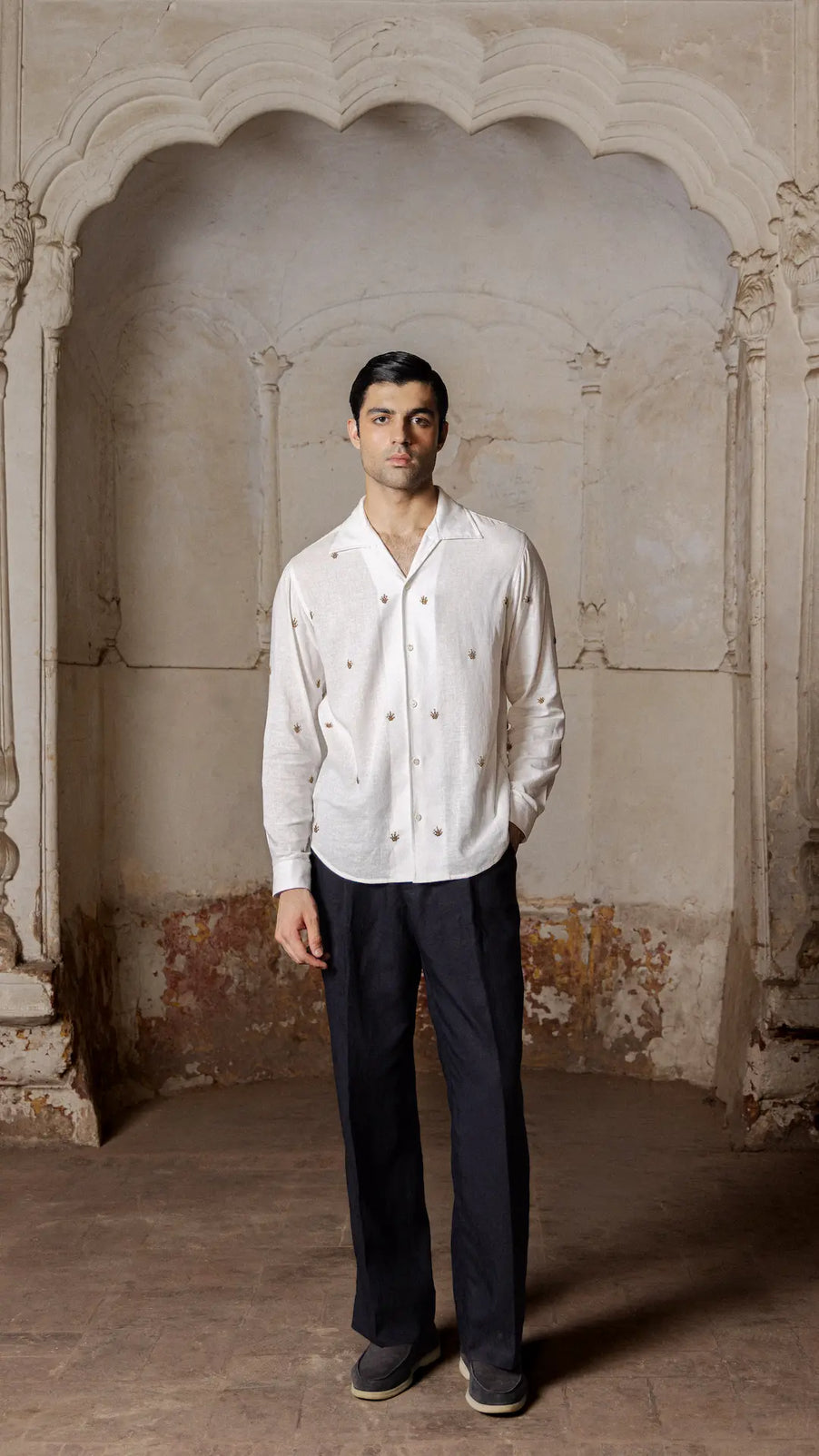
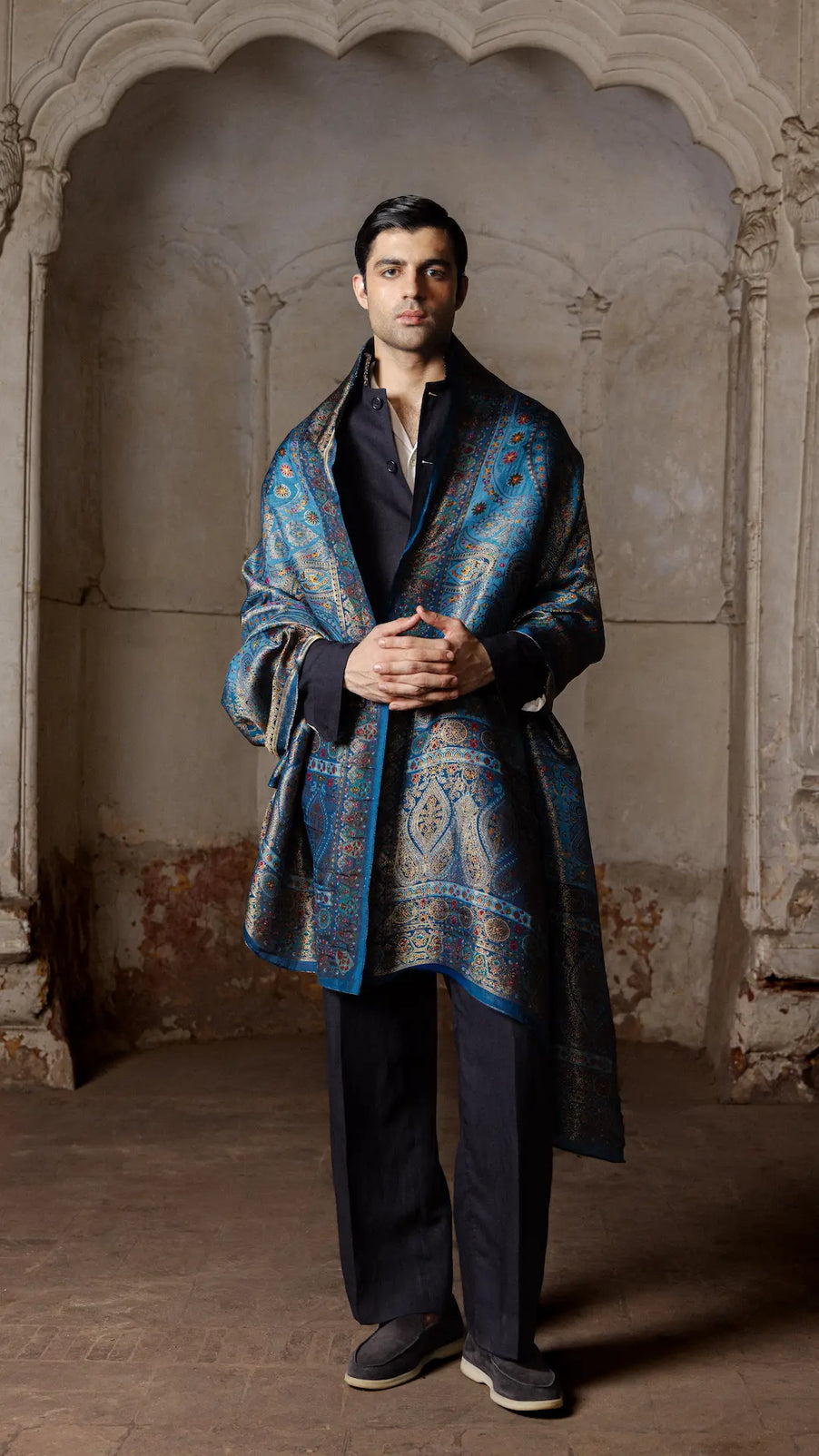
The film is called Inheritance.
I used that word eight days ago, in a letter about the difference between what you inherit and what you borrow. The argument there was that inherited things don’t need translating — that nobody in my family stops to explain a phrase when the subject is something that came down to them, because there’s no outsider in the room to explain it to.
That was the argument. This is what it looks like.
Everything in this film was made in Lahore in early 2026 by people I can name, and I want to name them here too, because the naming is the point.
Tailoring and pattern-making: Muhammad Amin, who everyone calls Faisal. Needle and beadwork: Haider Abbas Bajwa. Block printing: Shahid Imran.
Hand-carved wooden blocks, printed in layers, lined up by eye — no machine, no registration marks, just a man who has done it enough times that his eye is the instrument. Beadwork placed as house code rather than surface decoration. A garment drafted, cut, and finished by someone who has done it for longer than I’ve been alive.
I’ve written before that heritage claims have to be verifiable or they’re worth nothing. This is what I meant. Not handcrafted by skilled artisans. Not made with love in South Asia. Three men, three names, three techniques, on camera, in the room where the work happens.
If you have ever wondered what’s underneath a brand that says artisanal — this is the honest version of that sentence, and it takes ten minutes to say properly.
The film also answers something I’ve been dodging.
I disappeared for seven months. I’ve written around that a few times now, in a few different ways, and every one of those letters was ultimately a description of a room I was standing in that you couldn’t see. This is the room. I’d rather show it than describe it again.
So I’m not going to walk you through what’s in it. That would be the same mistake in a new format.
One thing I will say, because I didn’t expect it and it’s the part I can’t watch neutrally.
Somewhere in the middle, the film stops being about workshops and becomes about my mother.
I’ve mentioned before that Osami is her nickname for me. What I haven’t said is where any of this actually started — which is a kid trailing behind her, paying close attention to things a boy that age isn’t supposed to be paying attention to, absorbing a way of looking before he had any language for it.
She’s the reason I do this. And the film ended up being the first time she’s been part of it rather than adjacent to it.
I didn’t plan that. It happened in the edit, the way the real thing usually does.
The last thing worth saying is about who made the film itself.
Director Moiz Tirmizi. Producer and editor Ishma Areeb. Cinematographer Babar Dahr. Sound by Ali Mehar, colour by Farjad Baig, sound design by Shazayb Ahmad Khan, original score by Syed Umar Ali. Sohail Ali on production.
A film about Pakistani craft, made entirely by Pakistanis, in Pakistan. That was not a logistical outcome. It was the first decision I made about all this.
Watch it whenever you have ten quiet minutes. It isn’t a trailer and it doesn’t sell anything. It’s just the work, and the people doing it, and the reason I stopped talking for a while.
Then come back and tell me what you thought. I mean that — the comments on these have been thin and I’d rather hear from you than watch a number go up.
Shukriya for being in the room.
— Osama
Drop 1 arrives September 2026. Osami & Friends get first access.